

Ontario’s online gambling landscape transformed dramatically in April 2022 when the province launched its regulated iGaming market, creating a legal framework that protects players while generating revenue for communities across the region. If you’re considering joining platforms like Moonbet or other operators, understanding these regulations ensures you gamble safely within the law.
The Alcohol and Gaming Commission of Ontario (AGCO) now oversees all legal online casino and sports betting sites, requiring operators to meet strict standards for fair play, responsible gambling features, and secure financial transactions. Only sites displaying the AGCO registration mark are authorized to serve Ontario residents legally.
This regulatory shift ended the grey market era, replacing it with consumer protections including self-exclusion tools, deposit limits, and guaranteed payout mechanisms. Licensed operators must verify player identities, prevent underage gambling, and contribute tax revenue that supports provincial programs and municipal services across Toronto and neighboring communities.
For Ontario residents, these regulations mean accountability and recourse when issues arise. The system prioritizes player safety while offering the convenience of legal online gaming, marking a significant evolution in how Canadians engage with digital entertainment and sports wagering.
The Shift That Changed Everything
On April 4, 2022, Ontario made history by launching Canada’s first fully regulated online gambling market. For years, residents had accessed offshore gaming sites operating in a legal grey zone—unregulated, untaxed, and offering minimal consumer protection. While these platforms weren’t technically illegal for players to use, they existed outside provincial oversight, leaving Ontarians vulnerable to unfair practices and problem gambling without adequate support systems.
The provincial government recognized this gap needed closing. With an estimated $500 million in annual revenue flowing to offshore operators, Ontario saw an opportunity to both protect its residents and capture economic benefits for the province. The solution came through Ontario’s regulatory framework, establishing two key regulatory bodies working in tandem.
The Alcohol and Gaming Commission of Ontario (AGCO) took responsibility for registering and overseeing operators, setting strict standards for everything from fair gaming practices to responsible gambling measures. Meanwhile, iGaming Ontario (iGO), a subsidiary of the AGCO, manages the day-to-day operations of the market, conducting commercial agreements with approved operators and ensuring compliance.
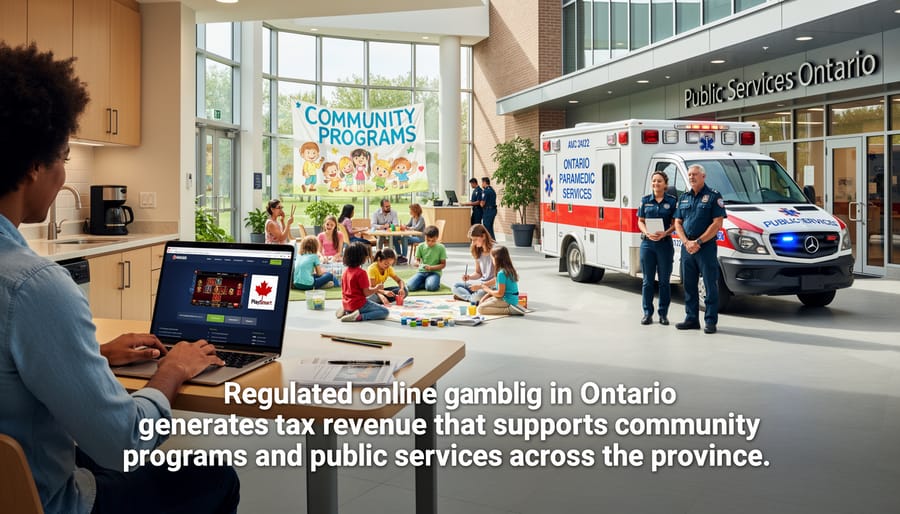
This wasn’t just about enforcement—it represented a fundamental shift in how the province viewed online gambling. Rather than fighting an unwinnable battle against offshore sites, Ontario chose regulation over prohibition. Licensed operators now pay taxes that fund community programs, players gain access to dispute resolution services, and problem gambling resources receive sustainable funding.
The transition required existing offshore operators to either obtain proper licensing or cease serving Ontario residents. Many major international brands chose to partner with iGO, while unlicensed sites faced significant penalties for continuing operations. For Toronto residents and Ontarians across the province, this meant finally having clear answers about where they could safely play online.

Who’s Actually in Charge Here?
AGCO: The Rule Makers
The Alcohol and Gaming Commission of Ontario (AGCO) serves as the primary watchdog for online gambling in the province, functioning much like other provincial regulations that protect consumers. Established in 1998, the AGCO took on expanded responsibilities when Ontario opened its online gambling market in April 2022.
The commission’s core responsibilities include licensing all legal gaming operators, ensuring they meet strict standards before entering the market. This means every legitimate online casino or sportsbook you encounter has undergone rigorous vetting. The AGCO reviews everything from financial stability to responsible gaming measures, creating a safety net for players across Toronto and beyond.
Consumer protection sits at the heart of the AGCO’s mandate. The commission investigates complaints, monitors operator conduct, and can impose penalties ranging from fines to license revocation. They also maintain public registries so residents can verify an operator’s legitimacy before placing bets.
For everyday players, this oversight translates into practical safeguards: secure payment processing, fair game outcomes, and access to self-exclusion programs. The AGCO collaborates with ConnexOntario and other community resources to support problem gambling prevention, ensuring entertainment doesn’t become harm.
iGaming Ontario: The Marketplace Manager
iGaming Ontario (iGO) functions as the operational arm of the Alcohol and Gaming Commission of Ontario, directly managing the province’s regulated online gambling marketplace. Think of iGO as the gatekeeper and ongoing overseer of the digital gaming space that opened in April 2022.
The organization’s primary responsibility involves entering into and managing operating agreements with individual gambling operators. Before any casino, sportsbook, or poker site can legally offer services to Ontario residents, they must sign a comprehensive agreement with iGO that outlines specific standards for game integrity, responsible gambling measures, and player protection protocols.
iGO also monitors operator compliance on an ongoing basis, ensuring that licensed sites maintain the standards they agreed to uphold. This includes reviewing marketing practices, verifying payment processing systems, and confirming that player funds remain protected through segregated accounts.
For Toronto residents and Ontario players generally, iGO’s role means there’s consistent oversight of the gaming platforms you access. The organization maintains a public registry of licensed operators, making it straightforward for players to verify whether a site is operating legally in Ontario. This marketplace management approach aims to balance industry growth with consumer safety, creating a regulated environment where entertainment and protection coexist.
How to Know If a Site Is Actually Legal
With dozens of gambling sites accessible online, knowing which ones operate legally in Ontario can feel overwhelming. Just as Ontario residents need to know where to purchase regulated cannabis products, understanding how to verify legitimate gambling operators is essential for your safety and legal protection.
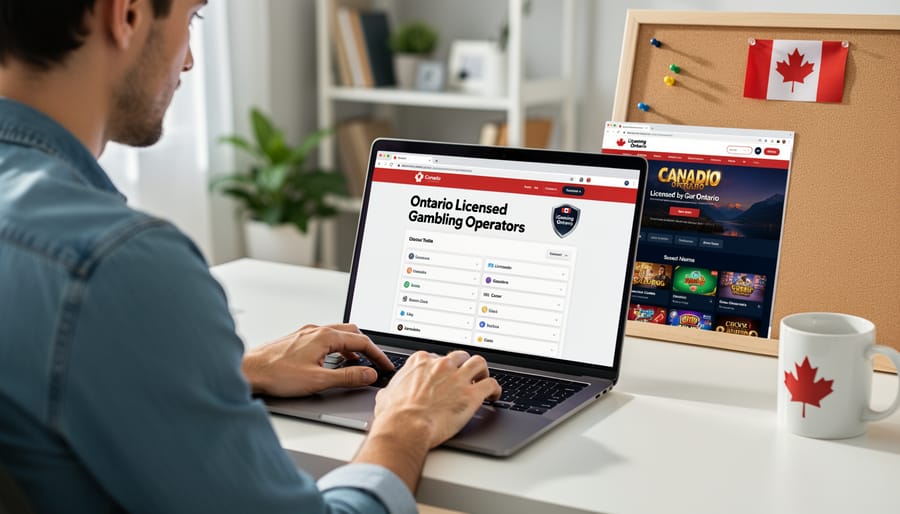
The most reliable verification method is checking the official iGaming Ontario operator list, available directly on the regulator’s website at igamingontario.ca. This comprehensive registry includes every licensed operator approved to offer online casino games, poker, and sports betting in the province. If a site isn’t listed, it’s operating illegally in Ontario, regardless of what licenses it may hold elsewhere.
Legitimate operators display specific visual identifiers on their websites. Look for the iGaming Ontario logo, typically found in the footer or on the “About Us” page. Licensed sites must also include their legal registration information and provide clear links to responsible gambling resources like ConnexOntario. The website should display its license number prominently, which you can cross-reference against the official list.
Maria Chen, a Toronto resident who recently started betting online, shared her experience: “I was using an offshore site for years without realizing it wasn’t legal here. When I checked the iGaming Ontario list and saw it wasn’t registered, I switched to a licensed operator. The difference is noticeable—better customer service, faster payouts, and peace of mind knowing my money is protected.”
Other red flags include websites without clear terms and conditions, those accepting only cryptocurrency, or platforms that don’t verify your Ontario location and age. Legal operators must geo-verify that you’re physically in Ontario and confirm you’re 19 or older before allowing real-money play.
When in doubt, start with well-known brands that have established Canadian presences or contact iGaming Ontario directly for verification assistance.
The Rules That Protect Ontario Players
Your Money Is Safer Now
One of the biggest improvements under Ontario’s regulated gambling system is how your money is protected. Licensed operators must keep player funds in segregated accounts, completely separate from their business operating money. This means if an operator faces financial difficulties, your deposits and winnings remain untouchable and secure.
The Alcohol and Gaming Commission of Ontario (AGCO) requires all licensed sites to maintain sufficient funds to cover player balances at all times. Think of it as a safety net that wasn’t guaranteed in the unregulated market. Toronto resident Maria Chen discovered this firsthand when her preferred site underwent a corporate restructuring last year. “I had $800 in my account and was worried I’d lose it,” she explains. “But the funds were protected, and I received every penny without issue.”
If disputes arise, Ontario players now have access to formal complaint resolution processes. Operators must address concerns within specific timelines, and if you’re unsatisfied, you can escalate to the AGCO. This regulatory oversight ensures accountability that simply didn’t exist before.
Licensed sites also display clear payout percentages and undergo regular audits to verify fair play. These protections transform online gambling from a leap of faith into a transparent, regulated activity where your rights as a consumer are genuinely protected.
Responsible Gaming Isn’t Optional Anymore
Ontario’s gaming regulators have made player protection tools non-negotiable for all licensed operators. Every platform must offer self-exclusion programs that allow players to ban themselves from gambling for set periods or permanently. These aren’t buried in fine print – operators must make them easily accessible from account dashboards.
Deposit limits are mandatory, letting players cap how much they can add to their accounts daily, weekly, or monthly. Reality checks interrupt gameplay at regular intervals, reminding players how long they’ve been active and how much they’ve spent. It’s like having a responsible friend tapping you on the shoulder.
Licensed sites must also display prominent links to problem gambling support resources, including ConnexOntario’s gambling helpline and local counseling services. Many Toronto residents have reported appreciating these safeguards, especially parents who want protection for young adult household members.
Operators face serious penalties for failing to implement these tools properly. The system aims to shift responsibility onto platforms, not just players. If you’re using a site without these features clearly available, that’s a red flag you’re on an unlicensed platform.
Age Verification and Identity Checks
Ontario’s regulated online gambling operators must verify that every player is at least 19 years old and physically located within the province before allowing any real-money wagering. This verification process typically happens in two stages: initial registration and ongoing location checks.
During account setup, operators require government-issued identification such as a driver’s license or passport. Many platforms use automated identity verification technology that cross-references your information against public databases and credit bureaus. Some operators may request additional documentation if the automated system can’t confirm your identity. Toronto resident Maria Chen shares her experience: “I uploaded my Ontario driver’s license, and my account was verified within minutes. The process felt secure and straightforward.”
Location verification happens continuously through geolocation technology built into the gambling apps and websites. This GPS-based system ensures you’re physically in Ontario when placing bets, even if you created your account while at home in Toronto. If you travel outside the province, you won’t be able to wager until you return.
The Alcohol and Gaming Commission of Ontario mandates these strict verification measures to prevent underage gambling and ensure operators comply with provincial jurisdiction requirements. Players should expect to provide personal information upfront, understanding these checks protect both the integrity of the regulated market and vulnerable individuals in our communities.
What You Can and Can’t Do
Since April 2022, Ontario residents have gained access to a regulated online gambling market that offers significantly more options than before. Understanding what you can and can’t do helps ensure you’re staying within legal boundaries while enjoying these entertainment options.
Under the current framework managed by the Alcohol and Gaming Commission of Ontario (AGCO) and iGaming Ontario, residents aged 19 and older can legally participate in various forms of online gambling through licensed operators. This includes casino games like slots, blackjack, roulette, and poker, as well as sports betting on professional and amateur events. One major development is the legalization of single-event sports betting, which means you can now place wagers on individual games rather than being limited to parlay bets involving multiple events.
Licensed operators offer diverse options including live dealer games, virtual sports, and real-time in-game betting that lets you place wagers as sporting events unfold. Many Toronto residents have embraced the convenience of accessing these platforms from home or on mobile devices while commuting or relaxing at local cafes.
However, important restrictions remain in place. You cannot legally gamble on unlicensed international sites that haven’t received AGCO approval, though enforcement primarily targets operators rather than individual users. Gambling on high school sports and certain amateur youth events is prohibited to protect vulnerable populations. Age verification is mandatory, and operators must implement responsible gambling measures including self-exclusion programs and deposit limits.
The regulations also prohibit certain advertising practices, particularly those targeting minors or promoting excessive gambling. Understanding these boundaries helps Ontario residents make informed choices while supporting a regulated market designed with consumer protection as a priority.
The Community Impact Nobody Talks About
When Ontario launched its regulated online gambling market in April 2022, the provincial government projected significant financial benefits for communities. The Alcohol and Gaming Commission of Ontario (AGCO) reports that revenue from regulated operators contributes to provincial coffers, which theoretically funds public services including healthcare, education, and infrastructure. However, community advocates point out that the direct connection between gambling revenue and specific local programs remains opaque to most residents.
From a municipal perspective, the transition has brought mixed reactions. Toronto councillor Maria Santos notes that while the province collects revenue, municipalities don’t receive dedicated funding streams despite bearing the social costs. “We’re seeing increased demand for problem gambling support services at the community level, but the resources don’t automatically follow,” she explains.
On the positive side, the regulated framework has improved access to support resources. All licensed operators must display links to ConnexOntario and provide self-exclusion options. The government allocated $6 million annually for problem gambling prevention and treatment programs. Gamblers Anonymous chapters across Toronto report that awareness campaigns tied to regulation have brought more people forward for help earlier in their gambling journeys.
Local business owner David Chen from Markham sees regulation as “bringing the money back home” from offshore sites, but worries about accessibility. “When gambling is literally in your pocket 24/7, it changes the dynamic,” he says. His perspective reflects a common concern among parents and community leaders about smartphone access making gambling more normalized.
Community health advocates emphasize that while regulation provides better consumer protections than the unregulated grey market, it simultaneously legitimizes and expands gambling access. Dr. Jennifer Park from the Centre for Addiction and Mental Health suggests the real community impact will become clearer after several years of data collection, urging ongoing monitoring of both economic benefits and social costs as Ontario navigates this new landscape.
Common Questions Ontario Residents Are Asking
Ontario residents navigating the regulated online gambling landscape often have similar concerns. Here are answers to the most common questions we’re hearing across Toronto and beyond.
Can I play on Ontario sites if I’m temporarily in another province? Your account remains active, but you must be physically located in Ontario when placing bets. Licensed operators use geolocation technology to verify your location. If you’re visiting family in Alberta or vacationing in BC, you won’t be able to access your Ontario account until you return. This applies even if you’re just across the border in Quebec.
What happens if I use grey market gambling sites? While individual players haven’t faced prosecution, using unlicensed sites means forfeiting consumer protections. You risk losing deposits, facing withdrawal delays, and having no recourse for disputes. The province focuses enforcement on operators rather than players, but understanding how regulatory changes affect Ontario residents helps you make informed choices about where to play.
Do I pay taxes on gambling winnings? Good news for players: gambling winnings in Canada, including Ontario, are not taxable. Whether you win $100 or $100,000, you keep the full amount. You don’t need to report casual gambling income on your tax return.
How does Ontario compare to other provinces? Ontario’s regulated market is currently the most developed in Canada, offering more licensed operators and game variety than provinces still relying on provincial lottery corporations. British Columbia and Alberta residents primarily access BCLC and AGLC platforms respectively, while Ontario residents can choose from dozens of private operators alongside OLG’s offerings.
These practical considerations help Toronto residents and Ontarians province-wide navigate the regulated gambling environment safely and confidently.
Ontario’s regulated online gambling market represents a significant step forward in consumer protection and responsible gaming. Since the launch of iGaming Ontario in April 2022, residents now have access to legal operators who meet strict provincial standards for fairness, security, and player safety. The key takeaway is clear: always verify that an operator displays the iGaming Ontario logo and appears on the official list of registered operators before creating an account or depositing funds.
By choosing legal operators, you’re not only protecting yourself from potential fraud but also supporting a framework that benefits Ontario communities through tax revenue and responsible gaming initiatives. The regulatory landscape continues to evolve as the province refines its approach based on real-world experience and community feedback.
For the most current information about licensed operators, regulatory updates, and consumer protection measures, visit the Alcohol and Gaming Commission of Ontario (AGCO) website at agco.ca or the iGaming Ontario portal at igamingontario.ca. These official resources provide up-to-date lists of legal operators and guidance on safe gambling practices. Staying informed helps ensure your online gaming experience remains both enjoyable and secure within Ontario’s protective regulatory framework.