
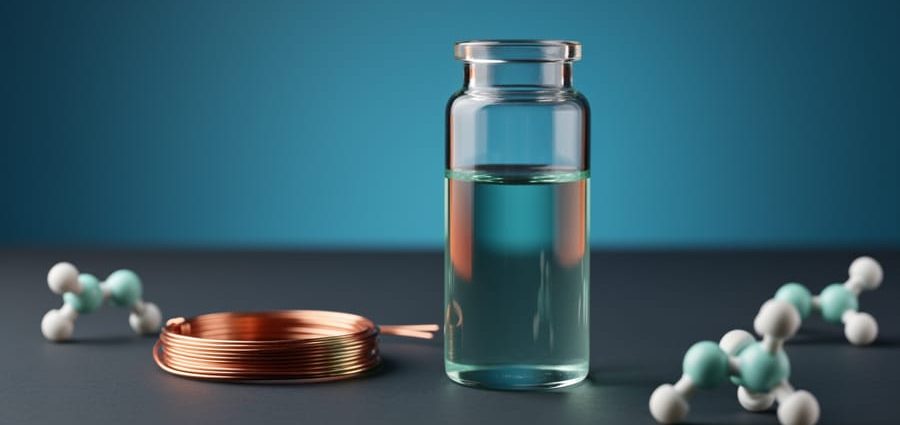
GHK-Cu is a naturally occurring peptide made of three amino acids (glycine, histidine, and lysine) that binds tightly to copper. It’s found in human blood plasma, saliva, and urine, and researchers have studied it in laboratory settings for decades. In a blend like GLOW by Kylo Peptides it sits alongside other research compounds rather than working alone.
Why does this matter to you? Because copper peptides keep surfacing in conversations about skin, wellness, and “glow” products, and the gap between what a lab study shows and what a person can expect is wide. Here in Canada, where Health Canada regulates what can be sold and how it can be described, that gap deserves a careful look.
This article explains what GHK-Cu is in plain language, how copper peptides behave in research, what other ingredients a multi-component blend typically includes, and how to think about handling and sourcing responsibly. We’ll keep the science separate from the hype, and point you toward Health Canada and licensed professionals for anything that touches your own health.
What GHK-Cu Means in Plain Language
GHK-Cu is a short protein fragment, and the name is just shorthand for what it’s made of. The “GHK” part stands for three amino acids: glycine, histidine and lysine. The “Cu” is the chemical symbol for copper, which the peptide holds onto like a small clasp. Put together, you get a tiny molecule that pairs those three building blocks with a copper ion.
Think of a peptide as a short string of beads, where each bead is an amino acid. Link a few together and you have a peptide. Link hundreds and you have a full protein. GHK-Cu is on the very short end, just three beads long.
It isn’t a lab invention, either. The peptide was first identified in human plasma, and later work found it in saliva and urine too, as described in this overview of GHK in human fluids. So the molecule itself occurs naturally, even though the products you’ll see sold under that name are made in a lab.
A few terms come up again and again when people read about these products:
- Peptide
- A short chain of amino acids linked together, smaller than a full protein.
- Tripeptide
- A peptide made of exactly three amino acids, like GHK.
- Copper complex
- A molecule that holds a copper ion in place, as GHK does when it becomes GHK-Cu.
- Blend
- A product that combines several ingredients, rather than offering one compound on its own.
- Certificate of analysis (COA)
- A supplier document reporting a batch’s purity and testing results.
That last pair matters when it comes to blends. In a lab-supply setting, a single-compound product contains one named substance and nothing else you’d expect to find. A blend, like the GLOW blend, is a deliberate mix, so the label should tell you everything that’s inside it and in what amounts.
How Copper Peptides Work in the Lab

The Role of Copper in the Peptide
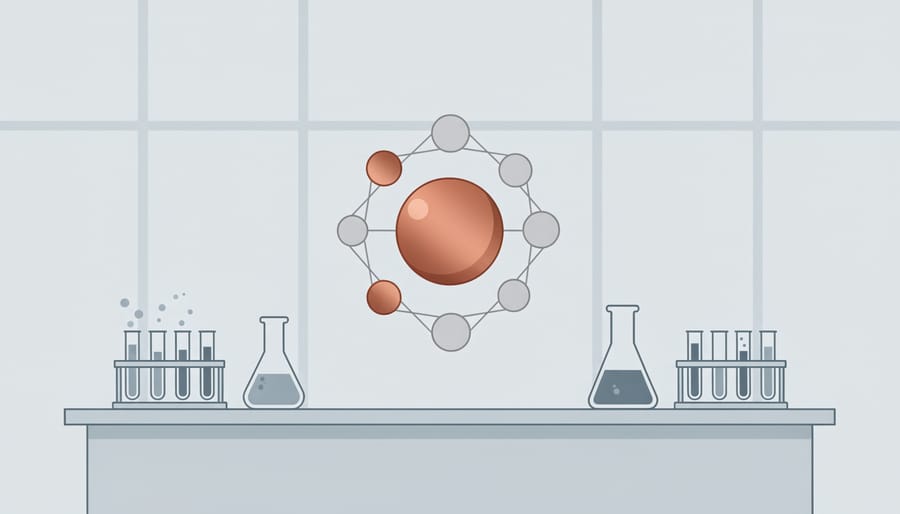
The copper ion is what turns a plain three-amino-acid chain into GHK-Cu. On its own, the glycine-histidine-lysine sequence is a short peptide. Add copper, and the peptide wraps around the metal, forming a stable complex. That binding is central to how the molecule is shaped and how it behaves in a lab setting. Researchers often describe this pairing as the reason GHK-Cu is studied differently from the bare peptide.
Because the copper-peptide bond is sensitive, handling matters. Heat, light, moisture and shifts in acidity can all affect how well the complex holds together over time. That’s why careful storage and clear documentation are such a big deal for anyone working with these materials. A product that has been stored poorly may not match what its label describes.
For curious readers, the takeaway is simple: the copper isn’t a garnish. It’s part of the molecule’s identity, and keeping it intact is part of good lab practice.
What Research Has and Hasn’t Shown
Published work on GHK-Cu is real, but it is thinner and more uneven than the buzz around it suggests. Researchers have looked at the peptide in cell cultures, in animal models, and in a handful of small human studies, mostly around skin, wound healing, and hair. Some of that work points to interesting activity, such as effects on collagen-related signalling and on how cells respond to oxidative stress.
Here’s the catch. Many of the human studies are small, short, and run with different formulations, concentrations, and measuring methods, which makes results hard to compare side by side. Some were funded or designed by the groups developing the products, so independent replication matters. A promising result in a petri dish or a mouse doesn’t automatically carry over to a person.
There is also a wide gap between “studied in the lab” and “approved for a specific use.” Interest from researchers doesn’t equal a proven benefit, and it certainly doesn’t amount to a green light for any particular product or blend.
The sensible takeaway for curious readers is to treat the research as an open question. Look for large, well-controlled, independently repeated studies, and be wary of any source that talks about results as if the science were settled.
What Goes Into a GLOW Blend: Components and Where GHK-Cu Fits
A GLOW blend is a multi-ingredient formulation, and GHK-Cu is usually one component among several rather than the whole product. The name describes a concept, not a fixed recipe. One supplier’s blend can look quite different from another’s, so there is no standard formula to assume.
That’s why the product’s own paperwork matters more than the name on the vial. The published ingredient list and the certificate of analysis are the only reliable way to know what’s inside. If a supplier can’t point you to both, that tells you something.
Researchers combine compounds for a few practical reasons. They may want to study how ingredients behave together, or they may want the convenience of one prepared mixture instead of several separate ones. “Fitting in” can mean a few different things. Ingredients may play complementary roles, so each one covers a different part of what’s being studied. The ratios matter too, because the amount of each compound shapes how the mix behaves. Stability is the third piece. Some ingredients can degrade faster in the presence of others, and copper-containing peptides can be sensitive to their surroundings, so a thoughtful blend considers how everything coexists over time.
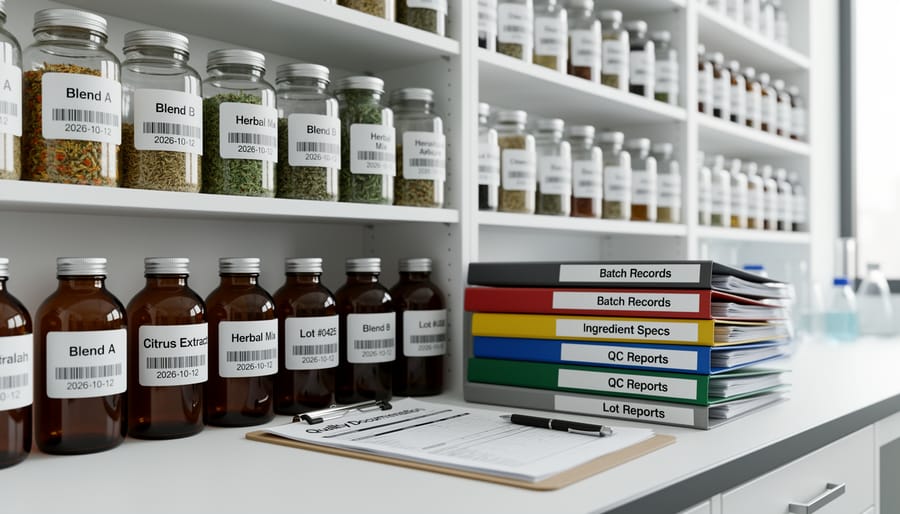
Here’s what to look for on a blend’s label or spec sheet:
- Every ingredient listed by name, along with its amount
- A batch or lot number that ties the product to its testing records
- Purity testing results, ideally from a certificate of analysis
- Clear storage instructions covering temperature, light and moisture
- An intended-use statement that says what the product is meant for
A missing item on that list doesn’t automatically mean a product is poor quality, but it does mean you have less to go on. A blend that lists “proprietary mix” without amounts, for instance, leaves you guessing about ratios, and ratios are exactly what make one combination differ from another.
A few minutes spent reading the documentation tells you far more than a catchy product name ever will.
How GHK-Cu Blends Are Used and Handled
GHK-Cu blends tend to turn up in a few predictable places. In research settings, they’re used in cell-culture and tissue-model experiments that look at how copper-binding peptides behave. In cosmetic-science circles, they come up in discussions about formulation, stability and how ingredients interact. Outside those settings, you’ll mostly see them mentioned in wellness chatter, which is where the confusion often starts.
Handling is where the practical details matter most. Peptides are delicate. Copper-binding ones like GHK-Cu can be sensitive to heat, light and moisture, so suppliers generally recommend keeping them in a cool, dark, dry place. Freeze-dried (lyophilized) material is typically more stable than anything already dissolved, and once a peptide is in solution, its shelf life usually shrinks. Repeated temperature swings and exposure to humid air can quietly degrade a product, which is why the supplier’s own storage guidance should always override any general rule of thumb.
That’s also why quality documentation carries so much weight. A certificate of analysis tells you what’s actually in the vial and how pure it is, usually based on independent testing such as chromatography or mass spectrometry. A batch or lot number lets that paperwork be traced to the product in your hands. Without it, a label is just a claim.
For Canadian readers, a sensible habit is to favour suppliers who publish this information openly, name their testing methods, and clearly state that a product is for research use rather than human consumption. If a seller is vague about sourcing, dodges questions about testing, or makes bold health promises, that’s worth noting. Local pharmacists and university research contacts can also help you understand what good documentation looks like, and they’re often glad to talk it through.
Canadian Rules and Sensible Questions to Ask
If you’re in Canada, one distinction is worth keeping in mind. Peptide products sold for research aren’t the same as drugs or natural health products that Health Canada has reviewed and approved. A lab-supply label isn’t a promise of safety or effectiveness for people, and it isn’t a substitute for a regulated health product.
Before considering anything for personal use, check what Health Canada has published about the product category you’re curious about. The agency’s website is the most reliable starting point, and it’s free. If you want a general sense of how provincial oversight works in a different product area, our look at Ontario regulation basics shows how rules, licensing and consumer responsibility can fit together.
Then bring your questions to people who know your situation. A local pharmacist can explain how products are regulated and flag possible interactions. A dermatologist can speak to what’s supported for skin concerns. And if you simply want to understand the science better, a university research contact may be glad to point you toward published studies. When you want guidance you can trust, get help from licensed professionals rather than relying on a product page alone.
Common Questions About GHK-Cu and the GLOW Blend
Is GHK-Cu naturally found in the body?
Yes. It was first identified in human plasma and has also been detected in saliva and urine. Research suggests levels may decline with age, though the full meaning of that is still being studied.
Is a blend the same as a single peptide?
No. A blend combines several ingredients, so its behaviour can’t be assumed from GHK-Cu alone. Always check that product’s own ingredient list rather than assuming a standard recipe.
Are lab results the same as proven human outcomes?
Not at all. Cell and animal studies can point researchers toward interesting questions, but they don’t confirm the same effects in people. Human evidence for GHK-Cu remains limited.
How can a reader judge a supplier’s quality documentation?
Look for a batch-specific certificate of analysis, clear ingredient listings, and testing details a third party could verify. Vague claims, missing batch numbers, or no documentation at all are reasons to be cautious.
Is this the same as a copper-peptide skincare product?
Usually not. Research-use materials and cosmetic products are made, labelled, and regulated differently, even when GHK-Cu appears in both.
If these answers raise more questions than they settle, that’s a healthy sign. Peptide research moves quickly, and plain, careful reading beats hype every time. Talking it through with a licensed pharmacist or dermatologist is a sensible next step, and many Torontonians also swap experiences and ask around through Toronto community resources. Just keep in mind that online chatter, however well-meaning, isn’t a substitute for professional guidance or documented evidence.
So, what should you take away from all this? GHK-Cu is a small, naturally occurring peptide, three amino acids holding onto a copper ion, and it has earned real attention in laboratory research. The GLOW blend simply pairs it with other ingredients, and because recipes differ from one supplier to the next, the label and the certificate of analysis tell you far more than any product name.
It’s worth keeping two things in mind together. Lab interest in copper peptides is genuine, but most of what we know comes from cell and animal studies, and evidence in people remains limited. That gap is exactly why careful reading beats excitement every time.
Check the ingredient list, ask for documentation, and run questions past a pharmacist, dermatologist, or other licensed professional. If you’re in Toronto or anywhere across Canada, stay curious and keep asking good questions. Your neighbours are probably wondering the same things.