

Read this guide to understand that selling your house as-is in Toronto means listing your property in its current condition without making repairs or renovations—a legitimate strategy that can save you time and money when circumstances demand a quick sale. Consider this option seriously if you’re facing financial pressure, dealing with an inherited property, going through a divorce, or simply lack the resources for costly updates in the competitive Toronto real estate market.
Price your property 10-20 percent below comparable renovated homes to attract investors and buyers who value location over aesthetics. Disclose all known defects upfront using Ontario’s standard disclosure forms to protect yourself legally and build trust with potential buyers. Work with experienced local real estate agents who understand Toronto neighbourhoods like Leslieville, The Junction, and North York, where as-is sales happen regularly and community buyers recognize hidden value beneath dated finishes.
What Does ‘Selling As-Is’ Actually Mean in Toronto?
When you sell a house “as-is” in Toronto, you’re offering your property in its current condition without making repairs or renovations before closing. The buyer accepts the home with all its existing flaws, whether that’s a leaky basement, outdated electrical, or cosmetic issues that need attention.
Under Ontario law, selling as-is doesn’t mean you can hide problems from potential buyers. You still have legal disclosure obligations. Sellers must complete a Seller Property Information Statement (SPIS) that honestly reports known defects, past repairs, and any issues with the property’s systems or structure. “As-is means the condition is transparent, not that it’s a mystery box,” explains Sandra Chen, a Toronto real estate lawyer who’s guided dozens of as-is transactions. “You can’t simply avoid responsibility by using those two words in your listing.”
The key difference from traditional sales lies in who handles repairs. In a conventional transaction, buyers often request fixes after the home inspection, and sellers typically negotiate these repairs or offer credits. With an as-is sale, these negotiations are off the table from the start. The listing price already reflects the property’s condition, and buyers understand they’re assuming all repair responsibilities.
However, as-is doesn’t protect sellers from serious non-disclosure issues. If you knowingly hide a cracked foundation or active water damage, buyers can still pursue legal action after closing. The protection works when you’re transparent about problems but simply don’t want to invest time and money fixing them before selling.
This approach particularly suits Toronto homeowners facing time constraints, financial limitations, or properties requiring extensive renovations that don’t make financial sense for the current owner to undertake.
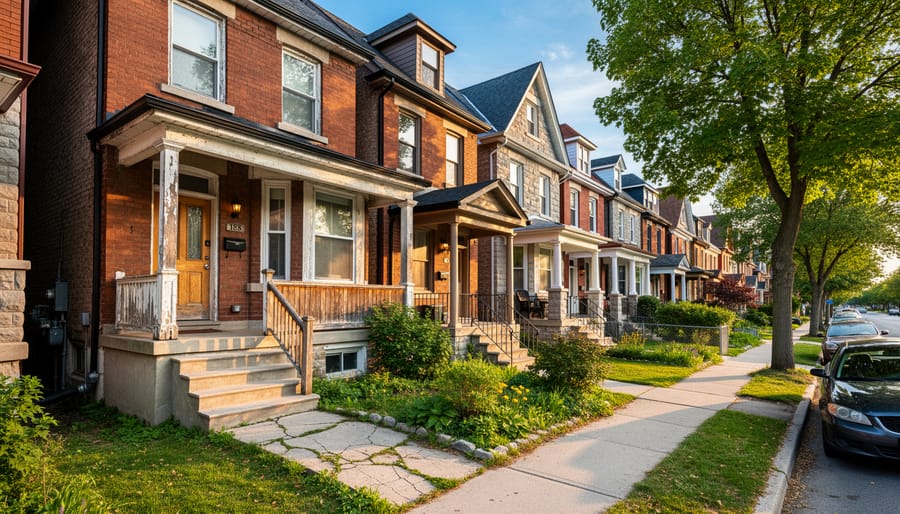
When Selling As-Is Makes Perfect Sense
Inherited Properties and Estate Situations
Dealing with an inherited property in Toronto neighbourhoods like Leslieville or High Park adds emotional weight to an already challenging time. Many families discover their loved one’s home needs significant updates—outdated kitchens, old furnaces, or deferred maintenance issues—just when they’re least equipped to handle renovations.
Selling as-is provides a compassionate alternative. Siblings managing an estate from different cities avoid coordination headaches around contractors and timelines. The Chens, who inherited their parents’ Scarborough bungalow, faced replacing the roof and updating electrical systems. Instead, they sold as-is within three weeks, allowing them to focus on grieving rather than project management.
This approach particularly helps when multiple family members co-own the property or when the estate needs quick settlement for tax or legal reasons. Toronto’s active investor market means inherited homes, regardless of condition, attract buyers who understand these situations. You’re not abandoning your family’s legacy—you’re making a practical choice that honours both your emotional needs and financial realities during a difficult transition.
Major Repairs You Can’t Afford (Or Don’t Want to Manage)
Sometimes the repair costs simply don’t make financial sense. In Toronto’s competitive market, foundation repairs can run $15,000 to $50,000, while a complete roof replacement might cost $8,000 to $20,000 depending on your home’s size. Electrical panel upgrades to meet current code often start around $3,000.
Beyond the money, there’s the time investment. Coordinating contractors, living through renovations, and managing unexpected complications can stretch for months. Many homeowners discover that even after investing in energy efficiency improvements and major repairs, they only recoup 60-80% of their costs in the sale price.
For inherited properties, estate settlements, or situations requiring quick sales, tackling major repairs often isn’t practical. Selling as-is lets someone else handle the renovations while you move forward with your plans. Toronto has plenty of investors and renovation-minded buyers specifically seeking these opportunities.
Relocation Pressures and Time Constraints
Life doesn’t always follow a convenient timeline. When Toronto residents face urgent career relocations across the country or internationally, renovating a home before selling simply isn’t realistic. Similarly, seniors downsizing from family homes in neighbourhoods like North York or Scarborough often lack the energy or financial resources for extensive updates before moving to smaller spaces or retirement communities.
Divorce settlements, unexpected inheritance properties, or sudden health concerns create situations where homeowners need to sell quickly without the stress of managing contractors and renovation budgets. For these Toronto homeowners, selling as-is offers a practical exit strategy that prioritizes speed and simplicity over maximizing every dollar. One Etobicoke seller shared how accepting her home’s dated condition allowed her to complete a cross-country job transfer in six weeks rather than spending months coordinating cosmetic improvements she’d never enjoy.
The Hidden Advantages Toronto Sellers Often Miss
While avoiding costly renovations is the most obvious perk, selling as-is in Toronto comes with several surprising advantages that many homeowners overlook.
Perhaps the biggest hidden benefit is speed. Traditional sales involving pre-listing renovations can drag on for months before you even list the property. Between contractor schedules, permit approvals, and inevitable delays, you’re often looking at a 3-6 month timeline just to get market-ready. As-is sales eliminate this entire phase, allowing you to list immediately and potentially close within weeks.
The psychological relief shouldn’t be underestimated either. Managing renovations while still living in a home creates immense stress for Toronto families. You’re juggling contractor visits, dealing with dust and noise, and often displacing your daily routines. One Leslieville seller shared that avoiding this chaos alone made the as-is route worthwhile, even though she accepted a slightly lower offer.
Financial predictability is another overlooked advantage. Renovation budgets have a notorious habit of ballooning beyond initial estimates. That kitchen refresh quoted at $15,000 can easily climb to $25,000 once you discover outdated plumbing or structural issues. With as-is sales, you know your bottom line from day one without gambling on renovation costs spiraling.
Toronto’s diverse real estate market also means you’re tapping into a substantial buyer pool specifically seeking as-is properties. Investors and house flippers actively hunt for these opportunities, often making competitive cash offers. DIY enthusiasts throughout neighborhoods like East York and North York prefer buying unrenovated homes to customize according to their vision rather than paying premiums for someone else’s design choices.
These buyers typically come prepared for quick transactions with financing already arranged, further accelerating your timeline. They understand what they’re purchasing and rarely request extensive repairs after inspections, streamlining the entire process considerably.
What Your As-Is Home Is Really Worth in Toronto Right Now
Understanding what your as-is home is truly worth requires looking beyond average sale prices and diving into neighbourhood-specific realities. In Toronto’s diverse real estate landscape, location dramatically impacts how buyers perceive properties sold in their current condition.
Older, established neighbourhoods like The Beaches, East York, and High Park generally have stronger as-is markets. Buyers in these areas often expect character homes that need updating, and many are actively seeking renovation projects. Sarah Chen, a real estate agent specializing in east-end properties, notes that “buyers in The Beaches understand they’re purchasing heritage charm, not modern finishes. The as-is discount here might be just 10-15% compared to renovated homes.”
Conversely, newer developments in areas like CityPlace or Liberty Village have fewer as-is sales. Buyers in these neighbourhoods typically expect move-in-ready condos and townhomes, making as-is properties harder to position.
To calculate your realistic selling price, start with comparable sales of renovated homes in your area, then subtract estimated renovation costs plus an additional 15-25% discount. This extra percentage accounts for buyer inconvenience and financing challenges. For example, if similar renovated homes sell for $1.2 million and your property needs $150,000 in updates, expect offers around $900,000 to $950,000 rather than $1.05 million.
Toronto’s market conditions significantly influence as-is valuations. During seller’s markets with low inventory, as-is properties command better prices because buyers have fewer options. In slower markets, expect deeper discounts as buyers become more selective.
Properties with strong bones in desirable school districts or near transit typically maintain value even when sold as-is. A 1960s bungalow in Leaside with outdated interiors will attract more interest than a similar home in a less connected neighbourhood. Working with an agent who understands these micro-market dynamics ensures realistic pricing that attracts serious buyers while maximizing your return.
How to Prepare Your As-Is Home for Maximum Appeal
Selling as-is doesn’t mean presenting your Toronto home in its worst light. Even without major home improvements, you can significantly boost your property’s appeal through strategic, low-cost efforts that help buyers envision its potential.
Start with a deep clean. This is your most cost-effective investment. Pay special attention to kitchens, bathrooms, windows, and floors. Toronto real estate agent Maria Santos notes that many sellers are surprised how much a professional cleaning service—typically costing $200-$400—can transform a space. “Buyers understand they’re purchasing as-is, but cleanliness signals that the home has been cared for,” she explains.
Decluttering comes next. Remove personal items, excess furniture, and anything that makes rooms feel cramped. Consider renting a storage unit for a month or two. Empty spaces photograph better and allow buyers to focus on the home’s bones rather than its contents. This is particularly important in Toronto’s competitive market where online listings receive the most attention in the first 48 hours.
Don’t overlook curb appeal. Simple tasks like mowing the lawn, trimming overgrown bushes, sweeping walkways, and adding inexpensive potted plants near the entrance create positive first impressions. In neighbourhoods like Leslieville or the Beaches, where character homes abound, a tidy exterior helps your listing stand out.
Finally, consider obtaining a pre-listing home inspection. While this costs $400-$600 in Toronto, it demonstrates transparency and builds buyer confidence. You’ll know exactly what issues exist, allowing you to price accordingly and avoid surprises during negotiations. This proactive approach often accelerates sales and reduces the likelihood of deals falling through after buyer inspections.

Finding the Right Buyer in Toronto’s Market
Toronto’s as-is housing market attracts a distinct group of buyers who see opportunity where others might hesitate. Understanding who these buyers are can help you connect with the right match for your property.
Investors and cash buyers dominate the as-is market. These experienced purchasers often seek properties they can renovate and flip, or convert into rental units. “Cash buyers represented about 60% of our as-is transactions last year,” shares Jamal Peterson, a Toronto real estate agent specializing in distressed properties. “They want quick closings and straightforward deals.”
Marketing your as-is home effectively means reaching beyond traditional listings. While MLS remains important, consider investor networks, real estate investment groups on social media, and specialized wholesalers who connect sellers with cash buyers. Be transparent in your listing description about the property’s condition – honesty attracts serious buyers and eliminates time-wasters.
Working with an agent experienced in as-is sales proves invaluable. They understand how to price competitively without leaving money on the table, and they know which buyers in their network actively seek properties needing work. Look for agents who have successfully closed multiple as-is transactions in Toronto’s diverse neighborhoods.
Expect offers below market value – that’s the trade-off for selling without repairs or staging. However, extremely low-ball offers shouldn’t be your only option. A property in Leslieville recently sold as-is for 82% of comparable renovated homes, demonstrating that realistic pricing doesn’t mean giving your home away. Evaluate each offer’s total package: price, closing timeline, conditions, and buyer reliability all matter when choosing the right purchaser.
Navigating the Legal Side Without Surprises
Selling a house as-is in Toronto doesn’t mean you can skip important legal protections. Ontario law requires sellers to disclose known material defects, even in as-is transactions. This means if you’re aware of foundation issues, electrical problems, or water damage, you must inform potential buyers regardless of your property’s condition.
Working with a real estate lawyer experienced in Toronto transactions is essential. Local lawyers understand specific municipal requirements and can help draft or review your as-is agreement to ensure it clearly defines what “as-is” means in your situation. A well-crafted agreement should explicitly state that buyers accept the property in its current condition and acknowledge they’ve had opportunities for inspections.
Toronto seller Maria learned this lesson when she sold her Junction home as-is. “My lawyer added specific clauses about the old knob-and-tube wiring I’d disclosed,” she explains. “When buyers tried to negotiate after their inspection, the agreement protected me because everything was documented upfront.”
Your as-is clause should address common concerns like appliance functionality, structural elements, and systems age. However, don’t confuse as-is with no disclosure. Hiding problems can lead to future liability claims, potentially costing far more than addressing issues transparently.
Consider requesting a pre-listing inspection to document your home’s condition. This creates a paper trail showing you’ve been forthcoming about issues, protecting you from claims that you concealed defects. Budget between fifteen hundred to three thousand dollars for legal fees when selling as-is in Toronto, as thorough documentation requires additional lawyer time but provides invaluable protection.
Real Stories from Toronto Homeowners
Real stories from Toronto homeowners reveal that selling as-is can be a practical solution across diverse circumstances. These experiences offer valuable insights for anyone considering this route.
The Ramirez family in Scarborough inherited a three-bedroom home filled with decades of memories and belongings. After their father passed away, the siblings lived in different provinces and faced the overwhelming task of clearing out the property and coordinating repairs. “We couldn’t afford the time or money to renovate,” shared Maria, one of the siblings. They listed the house as-is and received multiple offers within two weeks. While they accepted slightly below market value, they saved approximately $40,000 in estimated renovation costs and avoided months of stress. The lesson learned: transparency about the property’s condition attracted investors who saw its potential.
In Leslieville, James discovered significant foundation issues during a pre-listing inspection. The estimated repair cost exceeded $70,000, and he worried about the liability of making repairs himself. By selling as-is and pricing accordingly, he found a buyer who specialized in renovations. The transaction closed in 35 days. James emphasized the importance of obtaining multiple opinions on his home’s value before setting a price, which helped him negotiate confidently.
A downsizing couple in North York, the Chens, wanted to move quickly to be closer to their grandchildren. Their 1970s bungalow needed updating throughout, but they prioritized speed over maximum profit. They sold as-is within three weeks, accepting an offer 8% below comparable renovated homes. “The peace of mind was worth more than the difference,” they noted. Their advice: be realistic about pricing and work with agents experienced in as-is sales to attract serious buyers quickly.

Selling your house as-is in Toronto isn’t about waving a white flag or settling for less than you deserve. It’s a strategic decision that makes perfect sense for countless homeowners across the city, from those dealing with inherited properties in Scarborough to busy professionals in Liberty Village who simply don’t have time for extensive renovations. Whether you’re facing financial constraints, timeline pressures, or just want to avoid the stress of coordinating contractors, this approach offers a legitimate path forward.
The key is understanding your unique situation. Take time to honestly assess your property’s condition, your timeline, and your financial goals. Speak with neighbours who’ve gone through similar sales, and gather local perspectives on what buyers in your specific Toronto neighbourhood are seeking.
Most importantly, connect with real estate professionals who specialize in as-is sales within the Toronto market. They understand the nuances of Ontario’s disclosure requirements, can provide realistic pricing guidance based on current conditions, and know how to market properties that need work to the right buyers. The Toronto market has buyers specifically looking for fixer-uppers and investment opportunities. Your as-is home might be exactly what someone is searching for right now.