
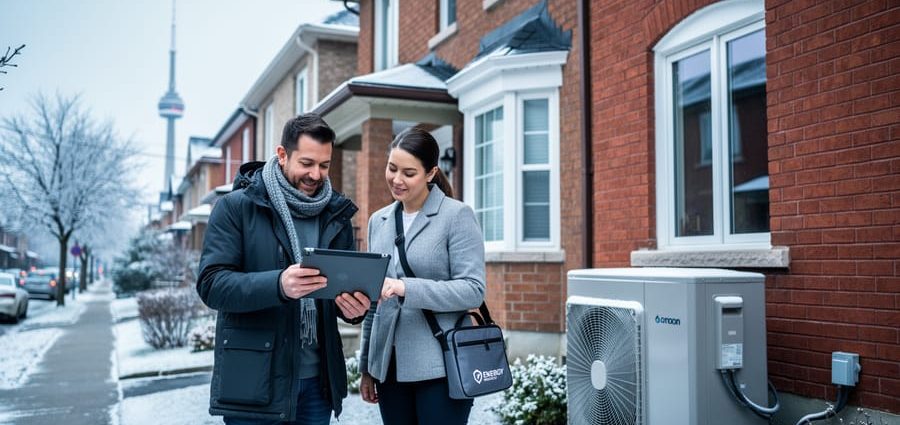
Toronto homeowners can access up to $10,000 in combined federal and provincial rebates for energy retrofits in 2024, but navigating the application process requires strategic planning. Start by booking a pre-retrofit EnerguideⓇ home evaluation through a certified energy advisor—this $500-$600 assessment is fully reimbursable and creates your roadmap for eligible improvements. The evaluation identifies where your home loses the most heat, whether through inadequate attic insulation, drafty windows, or an aging furnace, and ranks upgrades by energy-saving potential.
Focus your retrofit dollars on high-impact improvements suited to Toronto’s climate. Insulation upgrades deliver the strongest returns in our cold winters, particularly in older homes built before 1980 that typically have minimal attic coverage. Air sealing around windows, doors, and basement rim joists can reduce heating costs by 15-25% annually. Heat pumps qualify for substantial rebates and work efficiently in Toronto’s temperature range, often replacing both furnaces and air conditioners.
The Canada Greener Homes Grant offers up to $5,000 federally, while Ontario’s recent Enbridge Home Efficiency Rebate Plus program adds another $5,000 for natural gas customers. These programs stack, but timing matters—complete your pre-evaluation before starting work, hire licensed contractors, and submit all documentation within 12 months. Local energy advisors report that homeowners who bundle multiple upgrades maximize rebates while minimizing disruption, with typical projects paying for themselves through energy savings within 7-10 years.
What Exactly Is a Home Energy Retrofit?
A home energy retrofit is an upgrade to your house that reduces energy consumption, lowers utility bills, and improves comfort throughout the year. Think of it as giving your home a performance boost—much like updating an older car to run more efficiently.
The term covers a wide spectrum of improvements. On the simple end, you might replace drafty windows, add insulation to your attic, or upgrade to a high-efficiency furnace. These standalone projects can make a noticeable difference. But a comprehensive retrofit goes further, treating your home as an integrated system. This might include air sealing to eliminate drafts, upgrading insulation throughout the building envelope, installing heat pumps for heating and cooling, and adding ventilation systems that maintain healthy indoor air quality while keeping energy use low.
For Toronto homeowners, retrofits are particularly relevant. Many of the city’s most charming neighborhoods—from the Victorian homes in Leslieville to the post-war bungalows in Etobicoke—were built decades before modern energy codes existed. Sarah Chen, who owns a century-old home near High Park, discovered this firsthand. “Our heating bills were astronomical every winter, and the second floor was always freezing,” she recalls. “We thought it was just the price of living in an older home.”
These older houses often have minimal insulation, single-pane windows, and gaps that let conditioned air escape. In Toronto’s climate, with frigid winters and increasingly hot summers, that means your furnace and air conditioner work overtime, driving up costs and carbon emissions.
The good news? Retrofits address these inefficiencies systematically. Whether you start small with weatherstripping and programmable thermostats or pursue a deep retrofit that transforms your home’s energy performance, each improvement brings you closer to a more comfortable, affordable, and sustainable living space.
Toronto’s Major Energy Retrofit Programs: What’s Available Right Now
Toronto homeowners have access to a robust lineup of energy retrofit programs in 2024, making it easier than ever to upgrade your home while keeping costs manageable. These incentives stack together, meaning you can often combine federal, provincial, and utility programs to maximize your savings.
The flagship federal program, the Canada Greener Homes Initiative, offers grants up to $5,000 for eligible retrofits like insulation upgrades, air sealing, and heat pump installations. The program starts with a pre-retrofit home energy assessment conducted by a certified advisor, who identifies the most impactful improvements for your specific property. After completing your upgrades, a post-retrofit evaluation confirms your improvements and unlocks your grant funding. Many Toronto homeowners appreciate this structured approach because it takes the guesswork out of deciding which projects deliver the best return.
At the utility level, Enbridge Gas provides substantial support through its Home Efficiency Rebate Plus program. This initiative rewards homeowners for installing high-efficiency furnaces, water heaters, insulation, and air sealing measures. The rebates vary by upgrade type but can reach several thousand dollars when combined with other incentives.
| Program Name | Maximum Rebate | Key Eligibility Requirements | Typical Timeline |
|---|---|---|---|
| Canada Greener Homes Grant | $5,000 | Primary residence, detached or semi-detached homes, pre and post-retrofit evaluations required | 4-6 months from start to grant receipt |
| Enbridge Home Efficiency Rebate Plus | Varies by upgrade (up to $5,000+) | Property served by Enbridge Gas, qualified contractors, approved equipment models | 6-8 weeks after application submission |
| Canada Greener Homes Loan | $40,000 interest-free loan | Must participate in grant program first, approved retrofits only | Integrated with grant application |
The City of Toronto also offers targeted programs through the Better Homes Toronto initiative, which provides free energy coaching and connections to rebate programs. While the city doesn’t currently offer direct rebates, their energy coaches help residents navigate the complex landscape of available incentives and connect with qualified contractors.
Local resident Maria Santos from Leslieville shared her experience: “I was overwhelmed at first, but the programs walked me through everything. Between the federal grant and Enbridge rebates, I recovered about 40 percent of my insulation and furnace upgrade costs.”
The key to maximizing these programs is timing and coordination. Start with the federal grant application since it requires baseline assessments, then layer in utility rebates for specific equipment upgrades. Most programs require pre-approval before starting work, so planning ahead ensures you don’t miss out on available funding.
The Most Cost-Effective Retrofits for Toronto Homes
Insulation and Air Sealing: Your Foundation for Savings
Before jumping into any retrofit project, Toronto homeowners should prioritize insulation and air sealing—the unsexy but essential upgrades that deliver the biggest bang for your buck. “Most people want solar panels or a heat pump first,” says Mark Chen, owner of GreenSeal Insulation in Etobicoke, “but if your home is leaking heat like a sieve, those investments won’t perform nearly as well.”
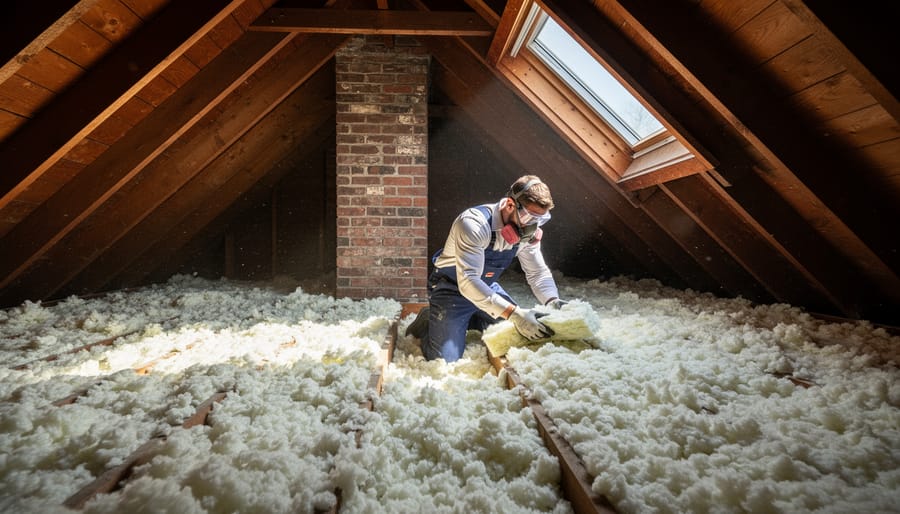
Toronto’s harsh winters demand robust insulation levels. The current building code recommends R-50 for attics, R-20 for basements, and R-24 for exterior walls, though many homes built before 1980 fall well short of these standards. Chen estimates that 60% of the older homes he inspects have inadequate attic insulation and significant air leakage around windows, doors, and rim joists.
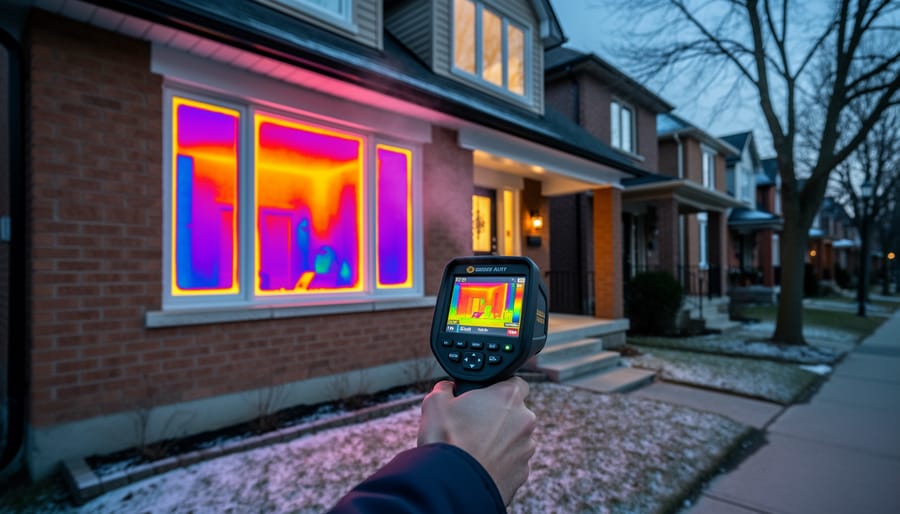
Air sealing is equally critical and should happen before adding insulation. This involves caulking gaps, weatherstripping doors and windows, and sealing larger openings with spray foam. “We use thermal imaging cameras to identify problem areas,” explains Chen. “The difference in comfort is immediate—no more cold drafts in January.”
For a typical Toronto semi-detached home (1,200-1,500 square feet), expect to pay between $3,500 and $6,000 for comprehensive attic insulation and air sealing. Full wall insulation runs higher at $8,000 to $15,000, while basement insulation typically costs $4,000 to $7,000. These projects often qualify for substantial rebates through the Canada Greener Homes Grant, which can cover up to $5,000 of your costs.
Heat Pumps: Why They’re Suddenly Everywhere in Toronto
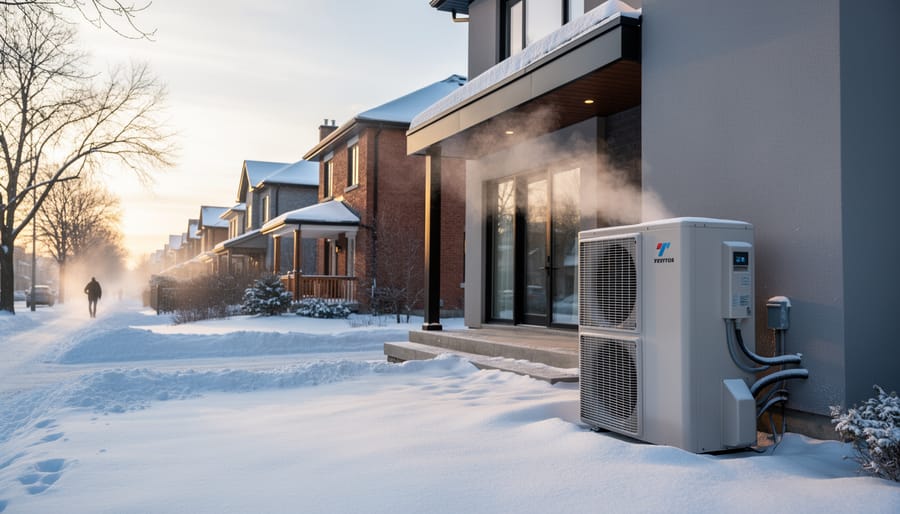
Drive through any Toronto neighbourhood lately and you’ve probably noticed outdoor units appearing on driveways and beside homes. Heat pumps have become the talk of local home improvement circles, and for good reason—modern cold-climate models have finally cracked the code on Canadian winters.
“I was skeptical about whether it would work in February,” admits Maria Chen, a Leslieville homeowner who installed a heat pump last spring. “But it kept us comfortable even during that -20°C stretch in January. Our gas bill dropped by about 60 percent.”
Today’s cold-climate heat pumps operate efficiently down to -25°C or lower, a far cry from older models that struggled below -10°C. They work by extracting heat from outdoor air and transferring it inside—think of it as a refrigerator running in reverse. In summer, they provide air conditioning by moving heat outdoors.
The savings vary depending on what you’re replacing. Switching from electric baseboard heating can cut costs by 50-70 percent, while replacing natural gas furnaces typically yields 30-40 percent reductions. James Park, who runs an HVAC company in North York, notes that “realistic expectations matter—you won’t eliminate heating costs entirely, but the combination of lower bills and available rebates makes the math work for most households.”
One common misconception? That heat pumps can’t handle extreme cold. While they do lose some efficiency in deep freezes, newer models maintain heating capacity far below what Toronto typically experiences. Many residents keep their existing furnace as backup, creating a hybrid system that optimizes comfort and savings year-round.
Windows and Doors: When Replacement Makes Sense
Window replacement often tops homeowners’ retrofit wish lists, but it’s not always the wisest first investment. In Toronto’s diverse housing landscape, the decision depends heavily on your property type and current window condition.
For heritage homeowners in neighbourhoods like the Annex or Cabbagetown, single-pane wooden windows can lose significant heat. However, before committing to full replacement—which can cost $500-$1,200 per window—consider these alternatives: storm windows add an insulating layer for $150-$300 per window, while weather-stripping and caulking costs under $50 per window and can reduce drafts by up to 30%.
Sarah Chen, who lives in a 1920s Leslieville home, shares her experience: “We weatherized our original windows first and saw our heating bills drop 15%. We’ve postponed full replacement and put that money toward insulation instead.”
Condo owners face different considerations. Many buildings undertake window replacement collectively, but individual unit owners can still improve performance with cellular blinds or window film to reduce heat loss.
Replace windows when they’re damaged, rotting, or fail to open properly. Otherwise, prioritize air sealing and insulation first—these typically deliver better returns on investment and qualify for higher rebate amounts through programs like Canada Greener Homes.
Step-by-Step: How to Apply for Toronto Energy Retrofit Rebates
Navigating the Toronto energy retrofit rebate process doesn’t have to be overwhelming. While the paperwork might seem daunting at first, breaking it down into clear steps makes the journey much more manageable. Many Toronto homeowners report that the entire process, from initial audit to receiving their rebate cheque, takes about three to six months depending on contractor availability and program processing times.
Here’s how to successfully apply for your retrofit rebates:
- Book your pre-retrofit energy audit with a certified energy advisor. Search for advisors through the NRCan Energy Advisor Directory and expect to pay between $350-$600 for this initial assessment. The advisor will evaluate your home’s current energy performance and provide a detailed report identifying improvement opportunities.
- Review your audit report carefully and prioritize which retrofits to pursue based on potential savings, available rebates, and your budget. Keep in mind that some programs require specific improvements to qualify for maximum rebates.
- Register your project with the applicable rebate program before starting any work. This is crucial – most programs won’t accept retroactive applications. Create your account through the Canada Greener Homes portal or your municipality’s specific program website.
- Obtain quotes from qualified contractors and ensure they understand program requirements. Ask for references from other Toronto homeowners who’ve completed similar retrofits. Having your energy audit report on hand helps contractors provide accurate estimates.
- Complete your retrofits using approved contractors and products that meet program specifications. Save all receipts, invoices, and documentation showing proof of purchase and installation dates.
- Schedule your post-retrofit energy audit within 120 days of project completion. Your energy advisor will verify improvements and generate the final report needed for your rebate claim.
- Submit your complete application package including both audit reports, paid invoices, proof of payment, and any required photos or technical specifications. Double-check that all documentation is legible and complete.
- Track your application status online and respond promptly to any requests for additional information. Most programs process claims within eight to twelve weeks of submission.
Common pitfalls to avoid include starting work before registering, missing documentation deadlines, and choosing non-approved contractors or products. Leslieville resident Maria Chen shares her experience: “I almost lost out on $4,000 because I didn’t realize I needed to register before my contractor started. Thankfully, we caught it just in time.” Her advice? Read the program guidelines twice and keep a dedicated folder for all retrofit-related documents from day one.
Finding Qualified Contractors in the Toronto Area
Finding the right professionals to handle your home energy retrofit can make the difference between a successful project and a costly disappointment. In Toronto, certified energy advisors should hold a Natural Resources Canada (NRCan) Energy Advisor designation, which ensures they’re qualified to conduct the required pre- and post-retrofit home evaluations. You can verify credentials through the NRCan directory or ask contractors directly for proof of certification.
When selecting retrofit contractors, look for those with experience in energy-efficient upgrades and relevant trade certifications. Insulation contractors should be certified by the Canadian Association of Insulation Contractors, while HVAC specialists should hold Technical Standards and Safety Authority (TSSA) licenses. Many Toronto homeowners recommend checking if contractors are members of organizations like the Building Performance Institute of Canada or GreenON-approved vendors lists, even though the program has ended.
Getting at least three detailed quotes is essential. “I thought the first quote was reasonable until I got two more,” says Sarah Chen, a Leslieville homeowner who recently completed her retrofit. “The prices varied by nearly 30 percent, and one contractor spotted issues the others missed.” Each quote should itemize materials, labor, timelines, and specify which rebate programs the work qualifies for.
Watch for red flags including contractors who pressure you to decide immediately, require large upfront deposits, or claim you don’t need permits when you do. Check references from recent Toronto-area projects and verify they’re in good standing with the Better Business Bureau. Visit previous job sites if possible, and don’t hesitate to ask neighbours in your community for recommendations. Many Toronto neighbourhoods have Facebook groups or community associations where residents freely share contractor experiences.

Real Toronto Homeowners Share Their Retrofit Stories
Maria Chen and her husband tackled their 1950s East York bungalow two years ago, frustrated by monthly heating bills that climbed above $300 in winter. They started with a home energy audit through Enbridge’s program, which cost just $125 and revealed their biggest culprits: an ancient furnace and virtually no attic insulation. “The auditor showed us thermal images of our house—it was literally glowing red from heat loss,” Maria recalls.
They invested $12,000 in a new high-efficiency furnace, added attic insulation, and sealed air leaks throughout the house. Between federal Greener Homes grants, Enbridge rebates, and provincial incentives, they received $7,200 back. Their winter heating costs now average $140 monthly—a savings of over $1,900 annually. “We’ll break even in under three years, and the house feels so much more comfortable,” Maria says. Her advice? “Don’t skip the energy audit. It tells you exactly where to focus your money.”
In Leslieville, James O’Connor retrofitted his century-old semi-detached home last spring. Living in an older neighbourhood, he was concerned about maintaining the home’s character while improving efficiency. He replaced drafty original windows with energy-efficient replicas and upgraded his insulation. The $15,000 project qualified for $5,500 in combined rebates. His energy bills dropped 35 percent, and he noticed an unexpected bonus: significantly less street noise. “I wish I’d done the attic insulation before the windows,” James admits. “The audit report ranked priorities, but I did what was most visible first. Learn from my mistake.”
North York condo owner Priya Kapoor took a different approach, replacing her old baseboard heaters with a heat pump system. Though condo retrofits face more restrictions, her $8,000 investment earned her $3,400 in rebates and cut her heating costs in half. “As a condo owner, I thought rebates weren’t for me,” she says. “But individual unit upgrades absolutely qualify.”
Common Questions About Toronto Energy Retrofits
Toronto homeowners often have specific questions when considering energy retrofits, especially when navigating local regulations and maximizing available incentives. Understanding these common concerns can help streamline your retrofit journey and avoid unexpected hurdles.
Can I retrofit a heritage property in Toronto?
Yes, but you’ll need approval from Heritage Preservation Services before making exterior changes. Interior upgrades like insulation and mechanical systems are typically easier to approve, and staff can often suggest historically-appropriate solutions that maintain your home’s character while improving efficiency.
Do I need condo board approval for energy retrofits?
For individual unit upgrades like windows or in-suite HVAC systems, you’ll need written approval from your condo corporation. Common element improvements require board voting, though many boards are increasingly supportive given the long-term cost savings for all residents.
What’s the best time of year to schedule retrofits in Toronto?
Spring and fall offer the most comfortable working conditions, though insulation and air sealing can happen year-round. Book contractors early for peak season, and consider winter installations for potentially shorter wait times and competitive pricing.
Can I combine multiple rebate programs?
Absolutely. Most Toronto homeowners stack federal Canada Greener Homes grants with provincial programs and utility incentives from Enbridge or Toronto Hydro. Just ensure you follow each program’s specific application timeline and documentation requirements to maximize your savings.
Many Toronto residents wonder about timing their retrofits around seasonal weather patterns. While exterior work like window replacement or siding happens best in warmer months, interior projects such as upgrading your furnace or adding attic insulation can proceed during winter when contractors often have more availability.
The process of coordinating multiple rebate programs might seem daunting, but it follows a logical sequence. Start with your EnerGuide home evaluation, which most programs require as a baseline. Submit applications before beginning work, keep all receipts organized by project, and complete the post-renovation evaluation to unlock your incentives. Local energy advisors familiar with Toronto’s housing stock can guide you through the paperwork and ensure you’re capturing every available dollar while meeting all program requirements.
Making your home more energy-efficient isn’t just about lowering your monthly bills—it’s an investment in your comfort, your property value, and the environment we all share. Whether you’re motivated by the potential to save hundreds or even thousands of dollars annually, or by the opportunity to reduce your carbon footprint, home energy retrofits deliver measurable returns that benefit both your wallet and your community.
The good news is that you don’t have to navigate this journey alone or shoulder the full cost yourself. With federal, provincial, and municipal rebate programs currently available, Toronto homeowners have unprecedented access to financial support that can cover a significant portion of retrofit expenses. From the Canada Greener Homes Grant to Enbridge Gas rebates and city-specific initiatives, these programs are designed to make energy efficiency achievable for more residents.
The key is to start now. Begin with a professional energy audit to identify your home’s specific needs and unlock rebate eligibility. This assessment provides a clear roadmap for improvements and helps you prioritize projects that will deliver the greatest impact for your particular home.
Remember that rebate programs and funding levels can change as government priorities shift and budgets are allocated. What’s available today may not be tomorrow, so exploring your options sooner rather than later ensures you don’t miss out on valuable incentives.
Have you recently completed an energy retrofit? We’d love to hear about your experience—what worked, what surprised you, and how it’s impacted your home. Share your story with the My Town Crier community and help your neighbours make informed decisions about their own energy efficiency journeys.