

Downtown Toronto real estate listings are online or printed advertisements for properties available to buy or rent in the city’s core neighborhoods, typically posted by sellers, landlords, or real estate agents on platforms like MLS, and brokerage websites. These listings include essential details such as price, square footage, number of bedrooms and bathrooms, property photos, and location information, serving as the primary gateway for anyone looking to find a home or investment property in Canada’s largest downtown market.
Understanding how to read and evaluate these listings has become essential for navigating Toronto’s competitive real estate landscape. The downtown core, stretching from the Waterfront through the Entertainment District, Financial District, and up to neighborhoods like Yorkville and the Annex, represents some of the most sought-after urban real estate in the country. Whether you’re a first-time buyer trying to break into the condo market, a renter searching for your next apartment, or simply curious about property values in your neighborhood, knowing what listings reveal (and what they don’t) can save you time and money.
This guide breaks down the anatomy of a downtown Toronto real estate listing, explains how the listing system actually works behind the scenes, and walks through the different types of properties you’ll encounter. You’ll learn what information matters most when comparing options, how to spot red flags, and how to use listings strategically in your search. We’ve gathered insights from local real estate professionals and current market participants to give you a ground-level view of what’s really happening in Toronto’s downtown property market right now.
What Are Downtown Toronto Real Estate Listings?
A downtown Toronto real estate listing is a formal advertisement of a property available for sale or rent within the city’s core, complete with detailed information about the unit, building, and asking price. These listings serve as the primary marketplace where sellers and buyers connect, typically through the Multiple Listing Service (MLS®) system operated by the Toronto Regional Real Estate Board.
Unlike listings in surrounding suburbs or neighbourhoods, downtown Toronto properties carry unique characteristics that shape their market behaviour. The core includes high-density condominiums, converted loft spaces, historic townhouses, and mixed-use buildings that blend residential and commercial space. These properties often command premium prices due to proximity to employment centres, transit, entertainment, and cultural amenities.
Each listing contains essential information that helps buyers evaluate a property: the address and unit number, square footage, number of bedrooms and bathrooms, asking price, property taxes, maintenance fees (for condos), parking and locker availability, and amenities. Photos, floor plans, and virtual tours typically accompany modern listings, alongside details about recent renovations, building age, and any special features like outdoor space or lake views.
- MLS® listing
- A property posted on the Multiple Listing Service, a shared database accessible to all participating real estate agents and visible on public search platforms. This represents the majority of downtown Toronto listings and ensures maximum market exposure.
- Private listing
- A property marketed off-MLS®, often through an individual agent’s network or brokerage website. These exclusive listings may target specific buyer pools or test the market before full public exposure.
- Days on market
- The number of days between when a listing goes live and when it sells. In May 2026, downtown properties averaged 27 days on market, indicating how quickly inventory moves.
- Sale-to-list ratio
- The percentage of the asking price that a property ultimately sells for. In May 2026, this ratio stood at 98%, showing that final prices closely matched seller expectations.
Pre-construction opportunities represent another listing category unique to downtown Toronto’s development landscape. Developers market condo units before construction completes, allowing buyers to purchase at current prices while the building takes shape. These listings appear on developer websites and through sales centres rather than MLS®, creating a parallel market that operates differently from resale properties.
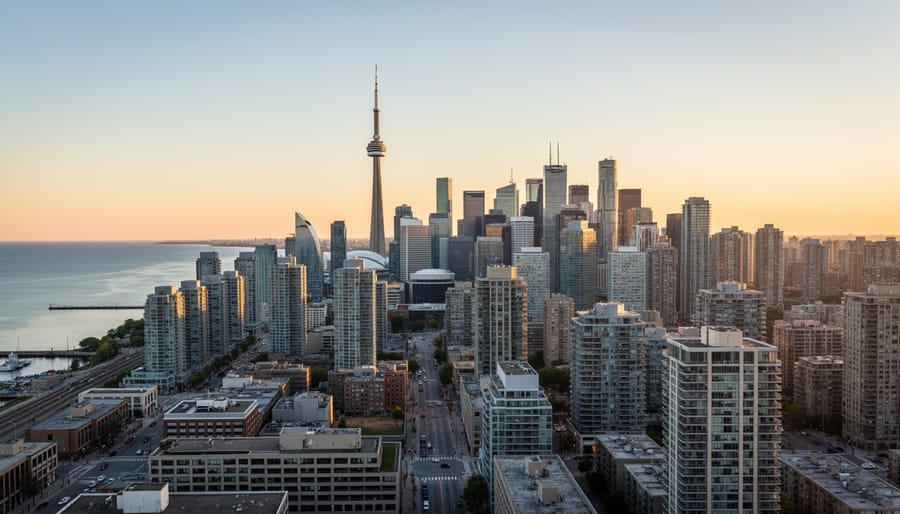
How Downtown Toronto Real Estate Listings Work
The Listing Process for Sellers
Sellers in downtown Toronto typically begin by consulting a licensed real estate agent to assess their property’s market value and condition. The agent conducts a comparative market analysis using recent sales data from similar units or homes in the neighborhood, taking into account the current market climate where new listings fell 12.9% year-over-year in June 2026 and properties are moving at a measured pace. Preparing the home for listing often involves decluttering, minor repairs, and energy efficiency upgrades that appeal to eco-conscious buyers. Professional photography and virtual tours have become standard practice, as high-quality visuals dramatically increase online engagement. Many sellers also invest in staging to showcase the property’s potential, with research showing clear home staging benefits in both sale price and time on market. Pricing strategy is crucial in the current environment where final sale prices averaged 98% of asking in May 2026. Agents use recent comparable sales, current inventory levels, and buyer demand signals to recommend a listing price that attracts serious offers while maximizing value for the seller.
How Buyers Search and Make Offers
Most downtown Toronto buyers start their search on MLS® platforms accessible through realtor websites or aggregator apps like . These tools let you filter by location, property type, price range, and features specific to downtown neighbourhoods. Many buyers also work with a buyer’s agent who can set up automatic alerts for new listings matching your criteria and provide access to properties before they hit the public market.
Once you identify promising properties, schedule viewings with your agent. In competitive areas like the Financial District or King West, popular units can receive multiple offers within days of listing. During viewings, evaluate the condition, building amenities, neighbourhood fit, and potential resale value. Your agent can research recent comparable sales to gauge fair market value.
When you’re ready to make an offer, your agent prepares the Agreement of Purchase and Sale, including your proposed price, deposit amount, conditions (like financing or inspection), and closing date. In Toronto’s downtown market, where May 2026 data showed properties selling at 98% of asking price after an average 27 days on market, competitive offers often waive conditions or include escalation clauses. Your agent negotiates on your behalf, and if the seller accepts, you proceed to due diligence, financing finalization, and eventual closing.

Types of Downtown Toronto Real Estate Listings
By Property Type
Condominiums dominate downtown Toronto’s real estate landscape, ranging from studio apartments in converted heritage buildings to luxury penthouses in glass towers along the waterfront. These properties typically include shared amenities like fitness centers and concierge services, with monthly maintenance fees covering building upkeep and utilities. Lofts, often found in repurposed industrial spaces in neighborhoods like King West and the Distillery District, offer open-concept layouts with exposed brick, high ceilings, and oversized windows that appeal to buyers seeking character and flexible living spaces.
- Condominiums: High-rise and mid-rise units with shared amenities, most common property type downtown
- Lofts: Open-concept spaces in converted warehouses and industrial buildings with architectural character
- Townhouses: Multi-level homes with private entrances, rare but available in pockets like Cabbagetown and St. Lawrence
- Detached and semi-detached homes: Single-family residences concentrated in established neighborhoods like Corktown and parts of The Annex
- Mixed-use properties: Commercial-residential combinations typically featuring retail or office space at street level
Townhouses provide a middle ground between condo living and detached homes, offering private outdoor space and multiple levels without the full maintenance burden of a house. Detached and semi-detached homes are scarce in the downtown core but do exist in older neighborhoods where single-family residences predate high-density development. Mixed-use properties, which combine residential units with ground-floor commercial space, represent unique investment opportunities for buyers interested in rental income or live-work arrangements.
By Transaction Type
Sales listings dominate the downtown market, where buyers and sellers typically work with agents to complete transactions over 30 to 90 days from accepted offer to closing. These listings show properties available for purchase, with prices reflecting current market conditions and home price expectations in specific neighborhoods.
Rental listings operate on shorter timelines, often closing within two to four weeks once a tenant is selected. Downtown rentals include both long-term leases and short-term furnished units, with landlords frequently requiring first and last month’s rent plus references before move-in.
Lease-to-own arrangements combine elements of both: tenants occupy the property while building toward eventual purchase, usually over one to three years. A portion of monthly rent typically credits toward the down payment, though these listings are less common in the downtown core than traditional sales or rentals.
Pre-construction assignments involve buyers selling their purchase contract before the building completes, allowing new buyers to step into existing agreements. These transactions require developer approval and can take several months to finalize, with the assignment seller often profiting from property appreciation during construction.
By Listing Visibility
Listings reach the market through different channels, each offering distinct strategic advantages. Public MLS® listings appear on and brokerage websites, giving sellers maximum exposure and buyers transparent access to property details, pricing history, and comparable sales data. This visibility matters in the current Toronto housing market shift where the 12.9% year-over-year drop in new listings makes every property count.
Exclusive listings are marketed only within a specific brokerage’s network, limiting exposure but offering sellers privacy and control over who views their property. Pocket listings take this further, they never hit MLS® at all, shared quietly among select agents and their clients. These off-market properties appeal to high-net-worth sellers avoiding public attention and to buyers seeking opportunities before competition heats up.
Coming-soon properties occupy a middle ground. Agents pre-market them to generate interest before the official MLS® launch, building anticipation while maintaining some control over initial showings. The trade-off is consistent: broader visibility usually means faster sales at market price, while restricted access favors discretion over speed.
Current Downtown Toronto Market Trends (2026)

Listing Volume and Inventory
The downtown Toronto market experienced a significant inventory squeeze in 2026. New listings across the GTA dropped 12.9% year-over-year in June, creating tighter supply conditions that directly affect downtown buyers and sellers. By July, the market saw 5,960 new listings in the preceding 28 days, a volume that left many buyers competing for limited options in desirable neighborhoods.
For sellers, fewer competing listings mean less pressure to underprice properties or make aggressive concessions. Homes that are well-presented and accurately priced often attract multiple interested parties within days. For buyers, the reduced inventory demands faster decision-making and stronger offers. Properties in sought-after downtown pockets move quickly, and hesitation can mean missing out entirely.
This supply constraint doesn’t affect all property types equally. Condominiums, which dominate downtown inventory, face different dynamics than the rare detached home or townhouse listing. The overall trend, however, points to a market where timing and preparation matter more than they did during higher-inventory periods.
Pricing Trends
Downtown Toronto’s pricing landscape in 2026 shows a market in transition. The GTA’s average sold price reached $1,082,457 in July 2026, up from $1,058,658 in June, a modest month-over-month gain that suggests seasonal momentum. However, the broader picture reveals cooling conditions: prices in June sat 3.9% below the same month in 2025, indicating year-over-year softening despite short-term upticks.
This price compression reflects shifting leverage between buyers and sellers. While downtown condos and central properties still command premiums for location and walkability, the year-over-year decline signals more negotiating room than the frenzied markets of recent years. Buyers benefit from increased selectivity, though desirable listings in prime neighborhoods, Entertainment District, King West, Yorkville, continue to attract multiple offers and sell closer to asking. The interplay between reduced inventory (new listings fell 12.9% year-over-year in June) and tempered buyer urgency creates pockets of strength amid the overall price retreat, making granular neighborhood analysis essential for accurate valuation.
Market Pace Indicators
Market pace indicators offer a snapshot of how quickly properties sell and how closely final prices match expectations. In May 2026, downtown Toronto and GTA listings sold in an average of 27 days on market, a moderate timeline that suggests neither a red-hot frenzy nor a stagnant environment. Properties moved at a steady clip without the bidding wars that characterized earlier years.
The 98% sale-to-list ratio from May 2026 tells an equally revealing story: sellers priced properties close to market value, and buyers paid nearly asking price without dramatic negotiation gaps. This near-parity signals a balanced market where realistic pricing wins. Properties priced aggressively sat longer or required reductions, while those aligned with comparable sales moved predictably. For buyers, it meant less pressure to overbid wildly; for sellers, it reinforced the importance of accurate upfront pricing rather than testing the ceiling and hoping.
Where to Find Downtown Toronto Listings
Finding the right downtown Toronto property starts with knowing where to look. Most buyers begin with MLS® (Multiple Listing Service) platforms, the official database where licensed real estate agents publish active listings. You can access MLS® data through major brokerage websites like Royal LePage, RE/MAX, and Sotheby’s International Realty, or through, the public-facing portal operated by the Canadian Real Estate Association that aggregates listings from across the country.
Beyond MLS®, several popular aggregator sites compile downtown Toronto properties from multiple sources:
- and, Search tools with filters for neighborhoods, property types, and price ranges
- Point2Homes and HouseSigma, Platforms offering sold price history and market analytics alongside active listings
- Specialized focus on condominium listings throughout the GTA
- Mapping interface that displays listings geographically across downtown neighborhoods
Working directly with a local buyer’s agent remains one of the most effective strategies, as agents often learn about pocket listings and pre-market opportunities before they appear publicly. Many downtown-focused brokerages maintain email alert systems that notify registered buyers when new properties hit the market in their target neighborhoods. These agents can also provide context about which buildings or streets tend to have lower utility costs or better condo management.
For pre-construction opportunities, visit developer websites directly or attend launch events promoted through brokerage partners who have exclusive access to new projects in the downtown core.
What to Look for in Downtown Listings
When scanning downtown Toronto listings, start by verifying the basics that agents sometimes gloss over: exact unit number, square footage (not just layout), maintenance fees for condos, and property tax history. Check that photos match the current condition, not staged shots from years ago, and confirm whether appliances, parking, and locker space are included or negotiated separately.
Red flags to watch for include vague descriptions like “cozy” (often code for small), listings that have been active for months without price adjustments, and any property lacking interior photos or virtual tours. Be wary of listings with unusually low maintenance fees in older buildings, which might signal upcoming special assessments or deferred repairs. If the days on market exceed the current average of 27 days, ask why the property hasn’t sold.
Neighborhood considerations matter as much as the unit itself in downtown Toronto. Research walkability scores, proximity to transit stops, and noise levels from nearby entertainment districts or construction projects. Different pockets of downtown carry distinct characteristics: Financial District condos stay quiet on weekends, while King West buzzes with nightlife. Check zoning for potential future development that could block views or sunlight.
Understanding current market dynamics helps you evaluate whether a listing represents fair value or inflated pricing. With average sale prices at $1,082,457 in July 2026 and properties typically selling at 98% of asking price, knowing what it means for buyers gives you negotiating power.
Ask your agent these direct questions: How long has this been listed? Have there been price reductions? Are there competing offers? What’s the building’s reserve fund status? What recent sales are comparable? These answers reveal whether you’re looking at a realistic opportunity or an overpriced holdout.
Frequently Asked Questions
What are the current Toronto housing market trends in 2026?
The GTA market in mid-2026 shows mixed signals: home sales increased 9.4% year-over-year in June, while new listings fell 12.9% during the same period. Average sold prices reached $1,082,457 in July 2026, though prices remain 3.9% below June 2025 levels, indicating a stabilizing market with constrained inventory.
How many new listings are available in Toronto right now?
As of July 2026, Toronto MLS® reported 5,960 new listings in the last 28 days. The year-over-year decline in new listings means buyers face tighter inventory, particularly in desirable downtown neighborhoods where competition remains strong.
How long does it take to sell a home in Toronto?
Properties sold in an average of 27 days on market in May 2026. Downtown condos and well-priced homes in transit-accessible areas typically move faster, while overpriced listings or properties requiring significant updates may sit longer.
What is the sale-to-list ratio in Toronto?
In May 2026, final sale prices came in at 98% of the asking price on average. This ratio suggests a relatively balanced market where strategic pricing matters, properties priced competitively tend to attract multiple offers and sell closer to or above asking, while overpriced listings see deeper discounts.
Understanding these metrics helps you gauge whether you’re entering a buyer’s or seller’s market and how to adjust your strategy accordingly. Downtown Toronto listings often behave differently from suburban properties due to the unique mix of condo inventory, international buyer interest, and proximity to employment centers. When evaluating listings, compare days on market and sale-to-list ratios for specific neighborhoods and property types rather than relying solely on city-wide averages. A King West condo and a Cabbagetown Victorian will follow different market rhythms even within the same broader trends.
how it works
Downtown Toronto real estate listings function through a coordinated system connecting sellers, buyers, and licensed professionals. When a property owner decides to sell, they typically hire a real estate agent who evaluates the property, recommends a listing price based on comparable sales and current market conditions, and prepares marketing materials including professional photos and detailed descriptions. The agent then enters the listing into the Toronto Regional Real Estate Board’s MLS® system, making it visible to thousands of agents and buyers across the region.
Buyers search listings through MLS®-connected platforms, real estate brokerage websites, or by working directly with buyer agents who can filter properties by location, price, size, and features. When a buyer finds a suitable property, they view it in person, conduct due diligence including home inspections and title searches, and submit an offer through their agent. In downtown Toronto’s competitive market, multiple offers are common. Once an offer is accepted, the transaction moves to closing, involving lawyers, mortgage lenders, and title transfer processes that typically complete within 30 to 90 days depending on conditions negotiated in the purchase agreement.
Types or components
Downtown Toronto real estate listings break down into three key dimensions that help buyers and sellers navigate the market: property type, transaction type, and listing visibility. Each category shapes how properties are marketed, searched, and sold in the core.
Property types range from the dominant high-rise condominiums and converted lofts that define the skyline, to the rarer townhouses and detached homes tucked into established neighborhoods. Mixed-use buildings, retail below, residential above, add another layer unique to urban settings.
Transaction types determine the deal structure: most listings are traditional sales, but rental listings, lease-to-own arrangements, and pre-construction assignments each follow different timelines and legal frameworks. Buyers need to match the transaction type to their financing and occupancy plans.
Listing visibility varies from fully public MLS® entries that reach the widest audience, to exclusive and pocket listings shared only within select networks, to coming-soon properties not yet on the market. Each visibility level offers trade-offs between exposure and exclusivity, influencing how quickly properties move and at what price.
Understanding how downtown Toronto real estate listings work puts you in a stronger position whether you’re buying, selling, or simply keeping a pulse on your neighbourhood’s market. The listing system connects individual properties to the broader dynamics shaping Toronto’s real estate landscape, from the 12.9% drop in new inventory we saw in June 2026 to the 27-day average selling timeline in May. These aren’t just statistics; they’re signals that help you time your decisions and set realistic expectations.
Staying informed about current trends means you can spot opportunities when they emerge and avoid overpaying in a shifting market. Downtown Toronto’s real estate story changes month by month, influenced by interest rates, development projects, and neighbourhood transformations that ripple through every listing.
We’d love to hear about your experiences navigating downtown listings. What surprised you most about the process? What advice would you give someone just starting their search? Share your insights in the comments below, your perspective adds to the community knowledge that makes Toronto’s real estate conversations richer and more grounded in real experience.