
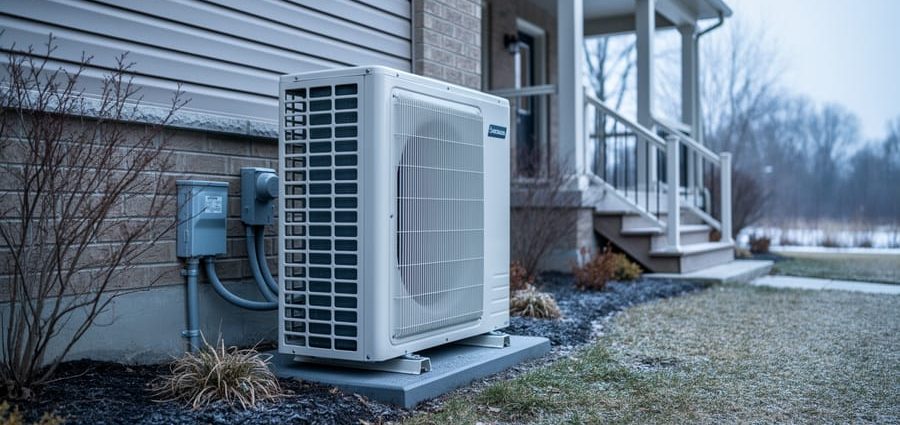
Installing a heat pump in a 3,000 square foot Toronto home typically costs between $15,000 and $30,000 in 2026, with most homeowners paying around $20,000 to $25,000 for a complete system. That wide range reflects major differences in equipment quality, installation complexity, and the type of heat pump you choose.
Air-source heat pumps sit at the lower end, while ground-source (geothermal) systems can push well past $30,000 due to excavation costs. Your final bill depends on your home’s existing ductwork, insulation quality, local climate demands, and whether you’re replacing an old furnace or starting from scratch. Toronto’s cold winters often require supplemental heating capacity, adding another $2,000 to $5,000 to standard installations.
The sticker shock is real, but the conversation doesn’t end at purchase price. Provincial and federal rebates can cut upfront costs by $5,000 to $10,000, and properly sized heat pumps save on energy bills by 30% to 50% compared to traditional furnaces and air conditioners. Over a 15-year lifespan, those savings compound.
Understanding where your money goes matters. Equipment accounts for roughly 40% to 50% of total cost, labor another 30% to 40%, and permits, electrical upgrades, and ductwork modifications fill the remainder. Smart homeowners compare multiple quotes, verify contractor credentials with the Heating, Refrigeration and Air Conditioning Institute of Canada, and factor in long-term operating costs before signing contracts. This guide breaks down every cost component so you can budget accurately and choose the right system for your home.
Heat Pump Costs by System Type for 3,000 Sq Ft Homes
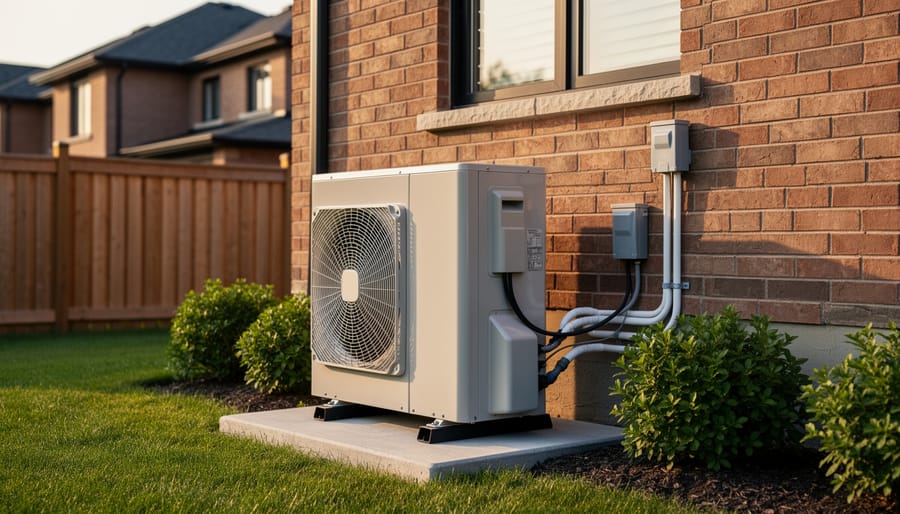
Air-Source Heat Pumps
For a 3,000 sq ft Toronto home, ducted air-source heat pumps typically run $8,000 to $15,000 installed. This range covers a properly sized central system that connects to your existing ductwork. You’re looking at a 3.5 to 5-ton unit to adequately heat and cool that square footage, with brands like Carrier, Lennox, and Mitsubishi offering cold-climate models rated down to -25°C.
Ductless mini-split systems cost $12,000 to $18,000 for the same space because you need multiple indoor units. Most 3,000 sq ft homes require four to six wall-mounted or ceiling-cassette heads connected to one or two outdoor compressors. The higher price reflects additional labor for running refrigerant lines and mounting individual units, but you gain zone control and avoid ductwork issues.
Air-source systems are Toronto’s most popular choice because installation takes two to three days, they work efficiently in our winters with modern cold-climate technology, and you get both heating and cooling. The lower upfront cost compared to geothermal makes these systems the practical entry point for most homeowners, especially when factoring in available rebates that can reduce costs by $3,000 to $6,000.
Ground-Source (Geothermal) Heat Pumps
Ground-source heat pumps deliver the highest efficiency but demand the steepest upfront investment for a 3,000 sq ft Toronto home. Expect total costs between $25,000 and $40,000, with equipment typically running $15,000-$22,000 and ground loop installation adding another $10,000-$18,000 depending on your property.
The ground loop system requires significant excavation or drilling. Horizontal loops need roughly 2,000-3,000 square feet of yard space and work for properties with adequate lot size, common in Toronto’s outer suburbs like Scarborough or Etobicoke. Vertical loops drill 150-400 feet down, ideal for tighter urban lots in neighborhoods like Leslieville or The Annex, but cost $3,000-$5,000 more due to specialized drilling equipment.
Toronto’s clay-heavy soil and bedrock geology influence drilling costs. Properties with challenging bedrock conditions pay premium rates. Winter installation typically costs 10-15% more as frozen ground complicates excavation.
Despite the sticker shock, geothermal systems slash operating costs by 40-60% compared to conventional heating. Most Toronto homeowners see payback in 10-15 years, with systems lasting 25+ years for indoor components and 50+ years for ground loops.
Dual-Fuel Systems
Dual-fuel systems pair an electric heat pump with a gas furnace backup, automatically switching between the two based on outdoor temperature and energy efficiency. For Toronto’s climate, this combination offers a practical solution: the heat pump handles moderate weather (roughly -10°C to 30°C), while the furnace kicks in during extreme cold snaps when heat pump efficiency drops.
Installation costs for dual-fuel systems in 3,000 sq ft Toronto homes typically run $10,000, $18,000. You’re essentially getting two heating systems that work in tandem, controlled by a smart thermostat that selects the most cost-effective option in real-time. Many Toronto contractors recommend this approach because it maintains home comfort during February deep freezes without overworking the heat pump.
The advantage? You combine electric efficiency during mild winters (increasingly common in Toronto) with gas heating reliability when temperatures plummet. The trade-off is maintaining two systems instead of one, though each experiences less wear since they share the workload. If you already have a newer gas furnace, retrofitting a heat pump to create a dual-fuel setup costs $6,000, $12,000, significantly less than replacing everything.
Complete Cost Breakdown: What You’re Paying For
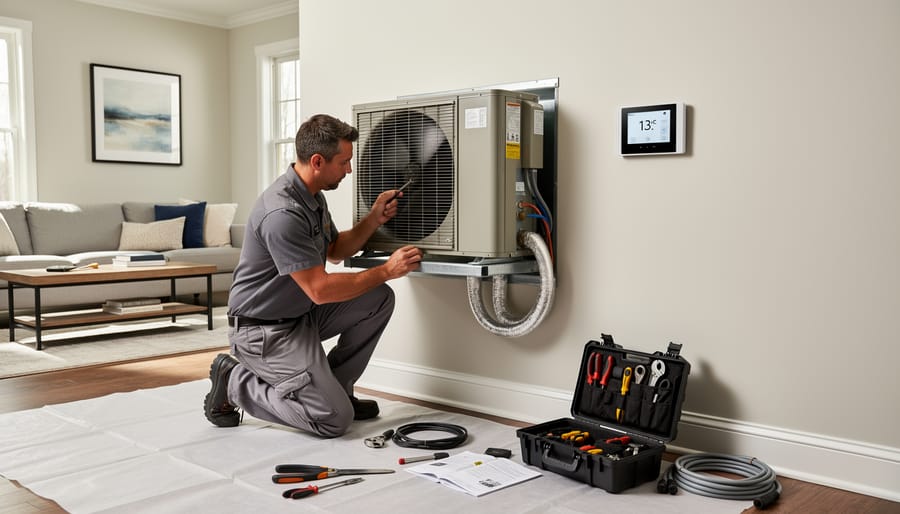
Understanding where your installation dollars go helps you evaluate quotes and plan your budget more effectively. For a 3,000 sq ft Toronto home, the total investment breaks down into several distinct components, each contributing to the overall system performance and longevity.
Heat Pump Equipment
The heat pump unit itself typically represents 40-50% of your total project cost. For a 3,000 sq ft home, you’re looking at equipment costs between $6,000 and $15,000, depending on the system type, efficiency rating (SEER and HSPF), and brand. Air-source units fall on the lower end of this range, while ground-source systems command premium prices. Higher-efficiency models with variable-speed compressors and advanced features cost more upfront but deliver better performance in Toronto’s temperature extremes.
Here’s how a typical $18,000 air-source heat pump installation breaks down:
– Heat pump equipment: $7,200-$9,000 (outdoor unit, indoor air handler, refrigerant lines)
– Labor and installation: $4,000-$5,500 (includes crew time, equipment, disposal of old system)
– Electrical upgrades: $1,500-$2,500 (panel upgrades, dedicated circuits, disconnect boxes)
– Ductwork modifications: $1,000-$3,000 (sealing, insulation, dampers, new supply runs)
– Permits and inspections: $300-$600 (ESA electrical permit, HVAC permit, final inspections)
– Thermostat system: $250-$800 (programmable or smart thermostat with heat pump controls)
– Start-up and commissioning: $500-$800 (refrigerant charge verification, airflow testing, system calibration)
Labor and Installation Complexity
Professional installation accounts for roughly 25-30% of the total project. This covers the expertise required to properly size refrigerant lines, achieve correct refrigerant charge, ensure proper drainage, and integrate with your existing system. Toronto’s older homes often present installation challenges that add labor hours: tight crawl spaces, finished basements limiting access, or the need to route lines through multiple floors.
Hidden Costs and Upgrades
Many Toronto homes need electrical panel upgrades to support a heat pump’s power requirements, particularly if your panel is older than 20 years or already near capacity. These electrical improvements can add $1,500-$3,500 to your project. Similarly, poorly insulated or leaky ductwork forces your new heat pump to work harder than necessary, so contractors often recommend duct sealing or modifications that weren’t part of your initial budget conversation.
The thermostat deserves particular attention. Heat pumps require specific controls that prevent the auxiliary heat from running unnecessarily in cold weather. A proper heat pump thermostat with adaptive recovery and outdoor temperature lockout features costs more than a basic programmable unit but protects your investment by optimizing system operation.
Factors That Change Your Heat Pump Installation Price
Your final price tag depends far less on the heat pump itself than on your home’s readiness to receive it. A 3,000 sq ft house with modern infrastructure might hit the lower end of cost estimates, while an older Toronto property needing electrical upgrades and ductwork changes can push totals up by $8,000 or more.
Existing HVAC Infrastructure
Homes with forced-air furnaces and existing ductwork save thousands compared to properties without ducts. If your current system uses the same distribution method, contractors can often adapt it rather than install new pathways. Ductless mini-split systems sidestep this issue entirely but require multiple indoor units, which adds equipment and installation hours. Radiant heating or baseboard systems mean starting from scratch with ductwork or going ductless, both of which increase your bill.
Electrical Panel Capacity
Most Toronto homes built before 1990 have 100-amp panels. Heat pumps for 3,000 sq ft spaces typically need 200-amp service, especially if you’re adding a backup heating element. Panel upgrades run $2,500 to $4,500 in Toronto, and older neighborhoods with aluminum wiring face steeper costs. Get an electrician’s assessment early, it’s a deal-breaker expense that contractors can’t waive.
Home Insulation and Air Sealing
Heat pumps work hardest in poorly insulated homes, which means contractors often recommend envelope improvements first. Toronto’s century homes and post-war bungalows frequently have drafty windows, uninsulated attics, or gaps around foundations. While not strictly part of installation, these upgrades ensure your system performs efficiently. Budget another $3,000 to $6,000 if insulation needs attention, though it pays back through lower operating costs.
Installation Accessibility
Tight side yards, finished basements with low ceilings, or second-floor mechanical rooms complicate installations. Crews need room to maneuver equipment and run refrigerant lines without tearing through multiple walls. Challenging sites add labor hours and sometimes require creative routing, pushing costs up by $1,500 to $3,000. Toronto’s narrow lots and attached homes often fall into this category.
Seasonal Demand and Contractor Choice
Spring and fall bring peak demand in Toronto. Quotes rise when contractors are booked solid, and wait times stretch to weeks or months. Winter installations (possible with cold-climate heat pumps) often come with discounts as crews have lighter schedules. Licensed contractors charge more than unlicensed installers, but proper permits, insurance, and warranty coverage justify the difference. Verify membership with HRAI (Heating, Refrigeration and Air Conditioning Institute of Canada) and check reviews in Toronto-specific forums.
DIY vs. Professional Installation: What’s Realistic?

Heat pump installation is fundamentally different from simpler HVAC upgrades. In Ontario, working with refrigerants requires G2 or G3 certification, electrical connections demand a licensed electrician, and any gas line work for dual-fuel systems needs a separate gas technician license. These aren’t optional credentials, they’re legal requirements with serious liability implications if you proceed without them.
The reality is that a 3,000 sq ft home installation involves complex refrigerant line sets, high-voltage electrical work (often 240V circuits), precise load calculations, and system commissioning that affects both performance and warranty coverage. Most manufacturers void warranties entirely on DIY installations, which means risking $15,000+ in equipment protection to save on labor costs.
That said, homeowners can reduce installation expenses through smart preparation. You can clear the installation area, remove obstacles around the outdoor unit location, ensure contractor access to the attic or basement, and handle any cosmetic repairs afterward. Some homeowners save $500-$1,000 by running their own concrete pad for the outdoor unit or painting the line set covers to match their home’s exterior after installation.
Pros
- Preparation work can reduce total project cost by $500-$1,000
- You maintain full manufacturer warranty with professional installation
- Licensed work meets Ontario building codes and passes inspection
- Professional installers carry liability insurance for any installation damage
Cons
- DIY refrigerant work is illegal without certification and voids all warranties
- Incorrect sizing or installation can cost thousands more to fix than hiring pros initially
- Electrical mistakes create fire hazards and insurance claim complications
- You assume all liability for system performance and safety issues
The Technical Standards and Safety Authority oversees HVAC installations across Ontario. They require permits for heat pump work, and inspectors check that licensed contractors performed refrigerant and electrical components. Attempting this work yourself doesn’t just risk your investment, it creates problems when you sell, as disclosure requirements flag unpermitted work and buyers’ home inspectors will question system installation quality.
Focus your energy on getting multiple quotes, verifying contractor credentials through the Heating, Refrigeration and Air Conditioning Institute of Canada, and preparing your home for installation day. The labor savings from DIY attempts rarely justify the warranty loss, code violations, and performance risks on a system this critical to your home’s comfort.
Rebates, Incentives, and Financing in Toronto (2026)
Installing a heat pump in your 3,000 sq ft Toronto home gets significantly cheaper when you tap into available financial support. Between federal, provincial, and local programs, homeowners can often reduce their net investment by $5,000 to $10,000 or more. The Canada Greener Homes Grant offers up to $5,000 for air-source heat pumps and up to $5,000 for ground-source systems, though you’ll need pre- and post-installation energy audits (roughly $600-800 combined, which are also partially covered). Ontario’s Enbridge Home Efficiency Rebate adds another layer of savings, with rebates varying by system efficiency and type.
Major rebate programs currently available include:
- Canada Greener Homes Grant: $5,000 for qualifying air-source systems, $5,000 for geothermal installations
- Enbridge Home Efficiency Rebate: Up to $6,500 for high-efficiency heat pumps (income-qualified homeowners may receive higher amounts)
- Toronto Hydro Programs: Seasonal incentives and contractor partnerships that can add $250-500 in additional savings
- Interest-free financing through Canada Greener Homes Loan: Up to $40,000 over 10 years for combined energy upgrades
- Low-income support: Enhanced rebates through programs like LEAP assistance for qualifying households
These energy rebates stack in most cases, meaning you can combine federal and provincial programs. Many Toronto contractors handle the paperwork as part of their service, though it’s worth confirming upfront. Beyond rebates, financing options include the Canada Greener Homes interest-free loan (up to $40,000 for comprehensive retrofits including heat pumps), home equity lines of credit, and contractor-arranged payment plans. Some HVAC companies partner with financing firms offering competitive rates specifically for energy-efficient upgrades. The key is applying for rebates before installation begins, as retroactive applications rarely qualify. Check program websites directly for current amounts and deadlines, since funding levels can shift throughout the year.
Operating Costs and Long-Term Savings
A heat pump typically costs $1,800 to $2,400 annually to operate in a 3,000 sq ft Toronto home, based on 2026 Toronto Hydro rates averaging $0.128/kWh and Enbridge gas prices around $0.11/cubic meter. That translates to roughly $150 to $200 per month during peak heating and cooling seasons, dropping to $80 to $120 during shoulder months.
Compare that to traditional heating and cooling systems running the same home:
| System Type | Annual Heating Cost | Annual Cooling Cost | Total Annual Cost |
|---|---|---|---|
| Air-Source Heat Pump | $1,400 – $1,800 | $400 – $600 | $1,800 – $2,400 |
| Gas Furnace + Central AC | $1,800 – $2,300 | $500 – $700 | $2,300 – $3,000 |
| Electric Baseboard + Window AC | $3,200 – $4,000 | $600 – $800 | $3,800 – $4,800 |
Those savings add up fast. A homeowner switching from a gas furnace and AC setup saves $500 to $600 yearly, recovering a $15,000 heat pump installation cost in roughly 12 to 15 years through energy bills alone. Factor in available rebates (potentially $5,000 to $10,000 off the upfront cost), and payback drops to 7 to 10 years.
Ground-source systems show even better long-term economics. Despite costing $25,000 to $35,000 installed, they cut operating costs to $1,200 to $1,600 annually, saving $1,000+ per year compared to gas systems. With rebates applied and 25-plus year equipment life expectancy, total cost of ownership over 15 years often beats conventional systems by $8,000 to $12,000.
Maintenance costs stay modest. Budget $150 to $250 annually for filter changes and routine service calls, comparable to furnace upkeep. The real financial advantage shows up over a decade of ownership, particularly as natural gas prices face upward pressure and electricity rates stabilize with Ontario’s growing renewable energy capacity.
Impact on Toronto Home Values
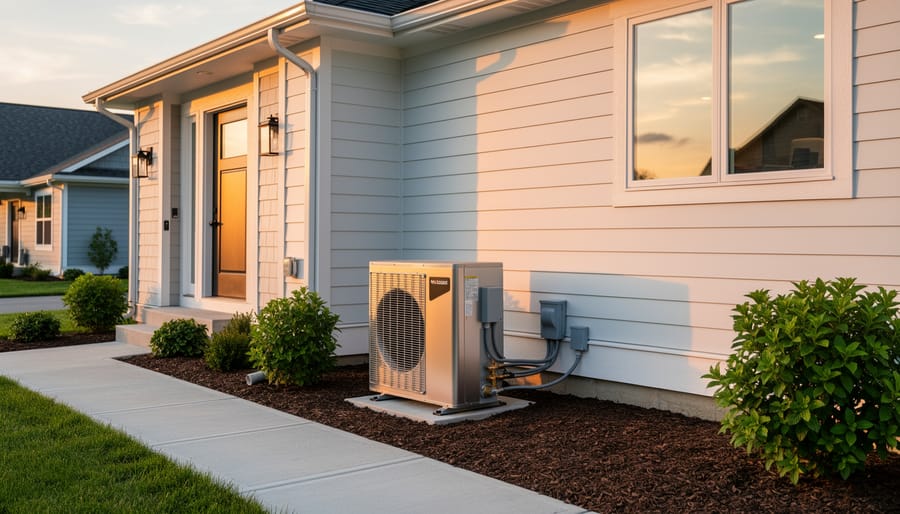
Heat pump installations typically add 3-5% to your home’s resale value in Toronto’s market, translating to $30,000-$75,000 for properties in the $1 million range. But the real advantage shows up in how quickly your home sells and the quality of buyer interest you attract.
Homes with heat pumps spend an average of 12 days less on the market compared to similar properties with conventional HVAC systems. Energy-efficient features rank among the top five priorities for millennial and Gen Z buyers, who now represent the largest segment of Toronto purchasers. When your listing highlights a new heat pump system, you’re positioning the property for buyers actively searching for lower operating costs and reduced environmental impact.
The neighbourhood matters significantly. In areas like Leslieville, The Beaches, and High Park, where sustainability-conscious buyers dominate, heat pumps carry premium appeal. Central Toronto condos and homes near transit hubs also benefit from the green home narrative. Conversely, in outer suburbs where heating costs run lower and properties skew larger, the perceived value increase tends toward the lower end of that 3-5% range.
Real estate agents report that documented energy bills showing actual savings strengthen negotiations substantially. Keep your utility statements from before and after installation. A heat pump installed within the past three years carries maximum resale impact; systems older than five years still add value but generate less buyer excitement.
Toronto’s mandatory home energy labeling discussions and potential future regulations make heat pumps a forward-looking investment. Properties that already meet anticipated efficiency standards avoid costly retrofits down the line, a selling point that resonates with savvy buyers thinking beyond the purchase price. The ROI calculation extends beyond pure dollars: faster sales, stronger offers, and broader buyer appeal all contribute to the overall return.
Getting Accurate Quotes: What Toronto Homeowners Should Know
Getting accurate quotes for your 3,000 sq ft home requires more than just calling a few companies and comparing bottom-line numbers. Toronto homeowners should approach this process systematically to ensure they’re getting fair pricing and quality work.
Start by requesting at least three detailed written quotes from licensed contractors. Each quote should itemize equipment specifications (brand, model, SEER/HSPF ratings, tonnage), labour costs, electrical work, ductwork modifications, permits, and warranty coverage. Vague lump-sum quotes make comparison impossible and often hide shortcuts or future upcharges.
- Verify the contractor holds a valid TSSA (Technical Standards and Safety Authority) license for gas work and HVAC refrigerant handling, both are legally required in Ontario.
- Check for WSIB coverage and liability insurance with your contractor’s certificate of insurance, not just their word.
- Ask for three recent references from homes similar in size to yours, then actually call them to ask about timeline accuracy, cleanup, and post-installation support.
- Request a detailed load calculation report showing how they determined the required heat pump size for your specific home, not just a rough square footage estimate.
- Compare warranty terms carefully: equipment warranties typically run 5-10 years, but labour warranties vary widely from one to five years.
Red flags include contractors who skip the home assessment and quote over the phone, push you toward the largest system “to be safe,” require large upfront deposits before work begins, or can’t provide proof of licensing. In Toronto’s tight contractor market, be wary of quotes significantly lower than others, they often signal subpar equipment, unlicensed workers, or planned corners cut during installation.
Typical installation timelines run two to five days for air-source systems, longer for geothermal. Spring and fall see the highest demand, so booking in winter or summer might yield better pricing and faster scheduling. Local community Facebook groups and neighbourhood forums often surface contractor recommendations from homeowners who’ve recently completed similar projects.
Frequently Asked Questions
Do heat pumps actually work in Toronto winters?
Yes, modern cold-climate heat pumps work effectively down to -25°C or lower, making them reliable for Toronto winters. Many homeowners pair them with existing furnaces in dual-fuel systems for backup during the coldest days, but standalone heat pumps can handle typical Toronto winter conditions without supplemental heating.
What size heat pump do I need for a 3,000 sq ft home?
Most 3,000 sq ft Toronto homes require a 4 to 5 ton heat pump, though sizing depends on insulation quality, ceiling height, window efficiency, and home layout. A professional heat load calculation accounts for these factors, and poorly insulated older homes may need larger capacity than well-sealed newer builds of the same square footage.
How long does heat pump installation take?
Air-source heat pump installations typically take one to three days for a 3,000 sq ft home, depending on ductwork modifications and electrical upgrades. Ground-source systems take longer, often one to two weeks, due to drilling or excavation requirements for the ground loop.
Can I replace just the outdoor unit to save money?
Replacing only the outdoor unit rarely works well and usually voids warranties, since indoor and outdoor components are designed as matched systems. Mismatched units reduce efficiency, increase energy costs, and create reliability issues that eliminate any upfront savings.
What ongoing maintenance costs should I expect?
Annual professional maintenance runs $150 to $300 in Toronto and includes filter changes, refrigerant checks, and system cleaning. Budget an additional $50 to $100 yearly for seasonal filter replacements if you handle those yourself, plus potential repair costs as the system ages beyond the warranty period.
Is a 2 ton or 3 ton heat pump ever right for 3,000 sq ft?
A 2 ton heat pump would be undersized for most 3,000 sq ft homes, struggling to maintain comfort and running constantly. A 3 ton heat pump might work for exceptionally well-insulated spaces or zoned systems where multiple smaller units heat different areas, but a single 4 to 5 ton unit typically provides better whole-home comfort.
These questions reflect what Toronto contractors hear most often during consultations. The sizing question matters particularly in older Toronto neighborhoods where homes may lack modern insulation standards, and the dual-fuel consideration addresses legitimate concerns about January cold snaps. Getting professional sizing ensures you don’t overpay for excess capacity or underpay for a system that can’t keep up.
Installing a heat pump in your 3,000 sq ft Toronto home typically costs between $12,000 and $30,000, with the final price depending on whether you choose an air-source system, geothermal setup, or dual-fuel configuration. This isn’t just an HVAC upgrade, it’s an investment in energy efficiency that can cut your monthly heating and cooling bills while increasing your property’s resale value in Toronto’s competitive real estate market.
Before committing, get at least three detailed quotes from licensed contractors and explore the federal, provincial, and municipal rebates currently available. These incentives can reduce your out-of-pocket costs by several thousand dollars. Factor in the long-term savings too: lower energy bills and reduced maintenance often mean your heat pump pays for itself within 10 to 15 years.
Toronto homeowners are increasingly making the switch to heat pump technology, joining a growing community focused on sustainability and energy independence. With proper planning, you’ll find a system that fits both your budget and your home’s needs, delivering comfort year-round while lowering your carbon footprint.