

Ontario homeowners planning renovations in 2026 are spending between $15,000 and $25,000 for cosmetic updates like fresh paint, new flooring, and kitchen facelifts, with pre-renovation inspections adding another $500 to $950 to the upfront bill. These ranges reflect what GTA residents are actually paying before HST this year, offering a baseline for anyone mapping out a project budget or comparing contractor quotes.
The numbers matter because they anchor realistic planning. A bathroom refresh that seemed affordable at $12,000 two years ago now starts closer to $18,000, and knowing the gap helps homeowners avoid sticker shock or mid-project cash shortfalls. Smart technology upgrades offer a partial offset: install an eligible thermostat and Ontario’s rebate programs put $100 back in your pocket, while Peak Perks adds $75 at sign-up and $20 annually. Natural Resources Canada estimates those devices trim about 8 per cent off yearly heating and cooling bills, turning a $200 upfront cost into long-term savings.
Program timing adds urgency. The Home Renovation Savings offer, verified on the official site as recently as July 16, runs only until December 31, 2026. That deadline compresses the window for homeowners hoping to bundle rebates with planned upgrades, and it shapes the order in which savvy renovators are tackling their punch lists this fall.
What Changed: Ontario Renovation Spending in 2026
Renovation spending across the Greater Toronto Area has shifted in 2026, with homeowners clustering their budgets around three distinct tiers. The numbers coming out of Ontario this year show a clear pattern: cosmetic refreshes landing in the $15,000 to $25,000 range before HST, upfront inspection costs between $500 and $950, and strategic investments in smart home technology backed by provincial rebate programs.
This landscape represents a pragmatic shift. Homeowners are paying for what they need, not what the market tried to sell them in overheated years past. The data points to deliberate choices: lighter cosmetic work that refreshes without restructuring, mandatory inspections that catch problems before demolition starts, and technology upgrades that qualify for government incentives. Understanding what a bathroom renovation costs in Ontario fits into this broader picture of realistic, project-specific budgeting.
The three developments that follow break down each spending tier, showing exactly where these numbers come from and why Ontario homeowners are making these particular investments in 2026. The Home Renovation Savings program deadline of December 31, 2026 adds urgency to decisions around rebate-eligible upgrades, pushing some projects forward and reshaping how residents think about renovation timing.
1. Cosmetic Refresh Budgets: The $15K, $25K Range
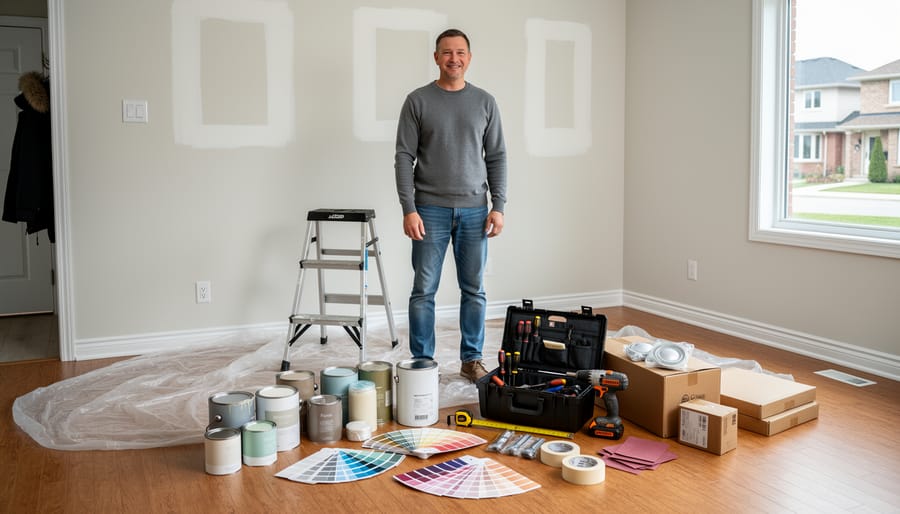
Most GTA homeowners planning lighter updates are working within a $15,000 to $25,000 budget before HST, a range that’s become the sweet spot for cosmetic refreshes in 2026. This price point covers the kind of visible improvements that modernize a home without the disruption and expense of structural work.
Within this budget, homeowners typically tackle projects that deliver immediate impact:
- Kitchen cabinet refacing or painting with new hardware
- Bathroom vanity replacement and fixture upgrades
- Fresh paint throughout main living areas
- Flooring updates in high-traffic zones
- Lighting fixture replacements and electrical outlet modernization
The prevalence of this range reflects a calculated approach to home improvement. Rather than committing to full-scale renovations that can stretch six figures, Ontario homeowners are prioritizing projects that refresh tired spaces while preserving their contingency funds. A $20,000 cosmetic update can transform the look and feel of a home’s main areas without the months-long timeline or permit complexity of major construction.
This spending pattern also indicates a shift toward maintaining existing homes rather than trading up in a challenging real estate market. Homeowners are investing in updates that improve daily living and potentially boost resale value down the road. The cosmetic refresh budget often includes a pre-renovation inspection in the $500 to $950 range, a smart upfront cost that helps homeowners avoid costly repairs by identifying hidden issues before contractors open walls or pull up flooring.
The popularity of this budget tier shows that Ontario homeowners are thinking strategically, balancing improvement goals with financial prudence in 2026’s economic climate.
2. Pre-Renovation Inspections: The $500, $950 Upfront Cost
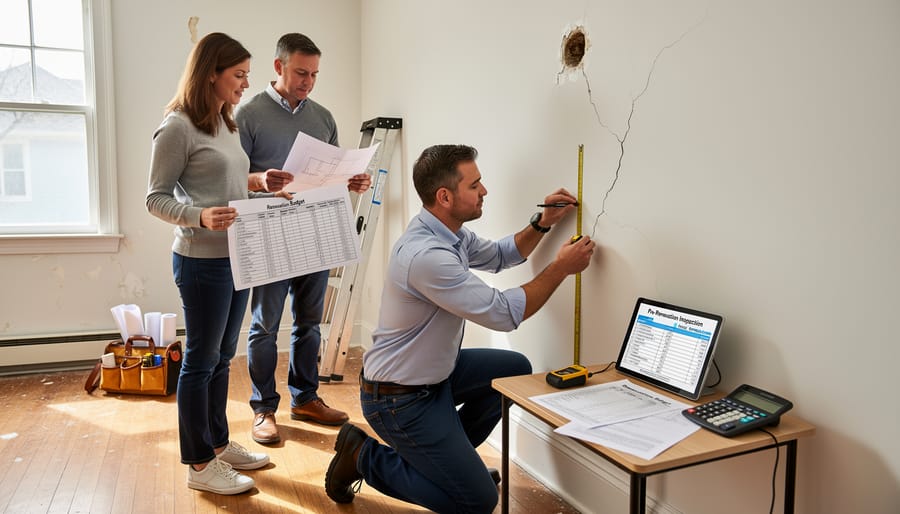
More Ontario homeowners are scheduling professional inspections before starting renovations, adding between $500 and $950 to upfront project costs. This practice has gained traction as a way to catch hidden problems early, before contractors open walls and discover issues that can blow budgets wide open.
A pre-renovation inspection covers structural integrity, electrical systems, plumbing condition, and moisture issues that might not be visible during a casual walkthrough. Inspectors look for load-bearing walls that can’t be removed, outdated wiring that requires upgrading to handle new appliances, and water damage that could complicate bathroom or kitchen work. The goal is to flag surprises before they become mid-project emergencies.
For single-family homes in the GTA, the $500, $950 range typically buys a thorough assessment focused on the areas you plan to renovate. Larger homes or properties requiring specialized testing, such as asbestos checks in older buildings, can push costs higher. Most homeowners find the expense worthwhile when it prevents a $5,000 surprise halfway through a kitchen remodel.
The inspection fits into your overall renovation budget as a planning tool, not a luxury. It helps contractors provide accurate quotes, reduces the risk of change orders that inflate final costs, and gives you leverage to negotiate if issues surface. Knowing what’s behind the walls before you commit to a scope of work also makes it easier to prioritize spending, you might decide to address electrical upgrades first and delay cosmetic changes, or bundle fixes to save on energy bills alongside aesthetic improvements.
Treat the inspection as insurance against budget creep. The upfront cost is predictable; the alternative is not.
3. Smart Home Upgrades and Available Rebates
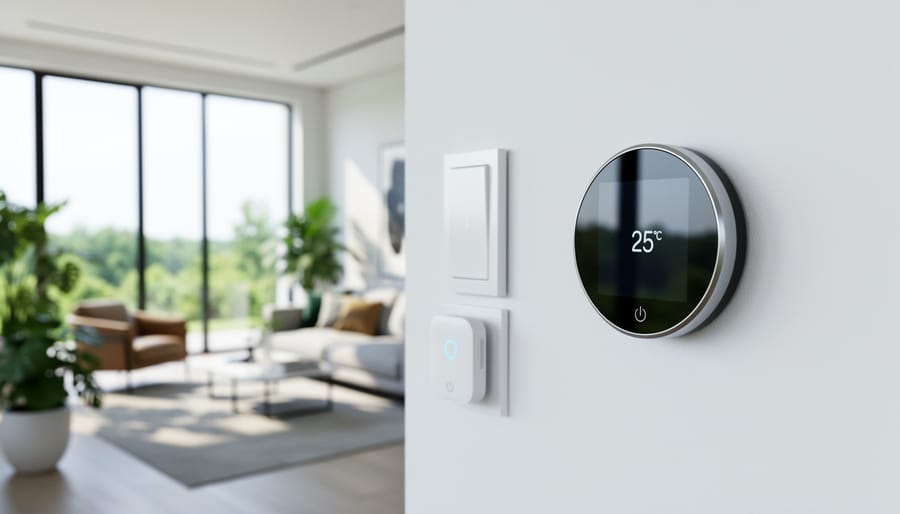
Ontario homeowners folding energy-efficient technology into their renovation budgets have two concrete energy rebates to work with in 2026. A smart thermostat installation qualifies for a $100 provincial rebate, and Ontario’s Peak Perks program adds $75 at sign-up plus $20 annually for participants who allow utilities to adjust their smart devices during peak demand periods. These aren’t speculative future offerings, they’re available now and factoring into how GTA residents are allocating their renovation dollars.
The financial logic is straightforward. Natural Resources Canada estimates that smart thermostats deliver about 8% savings on annual heating and cooling costs, which means the upfront device cost often pays for itself within two to three years for typical Ontario households. When you layer the $100 rebate on top of those ongoing savings, the net cost drops significantly. Homeowners planning cosmetic refreshes in the $15K, $25K range are increasingly adding smart thermostats as a low-friction upgrade that improves comfort and trims monthly expenses without stretching their overall budget.
The Peak Perks enrollment sweetens the deal further. The $75 sign-up bonus effectively covers most or all of the thermostat’s out-of-pocket cost after the provincial rebate, and the $20 annual payment continues as long as you participate. For homeowners already committed to smart home technology, it’s found money that reduces the effective cost of the upgrade to near zero. The catch is minimal: utilities can adjust your thermostat by a few degrees during rare peak events, a trade-off most participants find acceptable given the savings and the fact that you retain override control.
Why These Numbers Matter for Ontario Homeowners
Knowing what renovation projects actually cost in 2026 changes how Ontario homeowners plan and prioritize their budgets. The $15,000 to $25,000 cosmetic refresh range gives families a realistic starting point rather than an aspirational guess, which prevents the budget shock that derails projects halfway through. When you know inspection costs run $500 to $950 upfront, you can factor that into your planning instead of treating it as an unexpected expense that cuts into your material budget.
The inspection expense matters more than its dollar value suggests. Spending $950 now to identify structural issues or code violations before you commit to a $20,000 kitchen refresh can save thousands in mid-project corrections. It shifts renovation planning from optimistic estimates to verified conditions, which protects both your timeline and your wallet.
Program deadlines create real urgency. The December 31, 2026 cutoff for the Home Renovation Savings program means homeowners considering smart upgrades need to act this year to capture available rebates. A $100 thermostat rebate plus Ontario’s Peak Perks program ($75 at sign-up, $20 annually) reduces the net cost of efficiency improvements, and Natural Resources Canada’s 8 percent typical savings on heating and cooling costs compounds that value over time.
These spending patterns reveal Ontario’s housing priorities too. The popularity of cosmetic refreshes over major structural work suggests homeowners are investing in livability improvements within manageable budgets rather than pursuing ambitious overhauls. The growth in pre-renovation inspections shows a maturing market where due diligence precedes spending, and the uptake of smart home technology reflects both environmental awareness and practical cost management. Understanding these numbers helps you align your renovation decisions with both current market realities and available financial support.
What to Watch: Planning Your Renovation Budget
Mark the December 31, 2026 deadline on your calendar, that’s when Ontario’s Home Renovation Savings program ends, taking the $100 smart thermostat rebate and Peak Perks enrollment with it. Before committing to any renovation project, verify current rebate availability directly on official program sites, since incentive details and timelines change throughout the year.
What should I ask during a pre-renovation inspection?
Focus on structural concerns, hidden water damage, electrical capacity for planned upgrades, and whether your timeline is realistic given what inspectors find. The $500, $950 inspection cost pays for itself by preventing mid-project surprises.
How do I know if I qualify for the smart thermostat rebate?
Check the official program site for current eligibility requirements, which typically cover device specifications and installation standards. Verify before purchasing to ensure your chosen model qualifies.
Should I wait for new rebate programs or renovate now?
Use the verified programs available before December 31, 2026 rather than banking on future incentives that may never materialize. Plan with what exists today.
When building your budget, add 15 to 20 percent beyond your base estimate to cover unexpected discoveries and material variations. Request itemized quotes from multiple contractors, confirming what’s included in their cosmetic refresh packages if you’re targeting that $15K, $25K range. Track your spending against verified benchmarks, not aspirational numbers, and prioritize the inspection before finalizing plans, what you discover in that $500, $950 assessment will shape every dollar that follows.
Understanding what Ontario homeowners actually paid in 2026, $15K, $25K for cosmetic refreshes, $500, $950 for inspections, and rebates up to $100 for smart thermostats, gives you a realistic foundation for your own renovation planning. With the Home Renovation Savings program ending December 31, 2026, now’s the time to verify current rebates and budget with confidence based on real GTA spending data, not guesswork.