
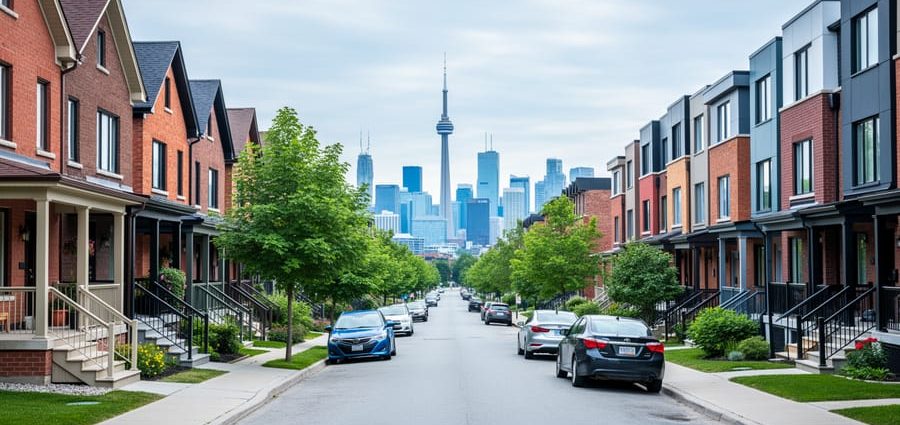
Toronto’s real estate market stands at a pivotal moment in 2024, with shifting interest rates and evolving buyer sentiment creating distinct opportunities for those who understand the current landscape. After a period of significant price corrections throughout 2022 and 2023, the market is showing signs of stabilization, though conditions vary dramatically across neighbourhoods and property types.
Recent data reveals average home prices hovering around $1.1 million, down from peak levels but still reflecting Toronto’s position as Canada’s most expensive real estate market. Inventory levels remain tight in sought-after areas like Leslieville and High Park, while condo markets in downtown cores face softening demand as remote work reshapes location priorities.
Understanding whether to buy, sell, or wait requires analyzing multiple factors: Bank of Canada policy signals, immigration patterns driving sustained demand, and local supply constraints that continue limiting new construction. First-time buyers are finding entry points in emerging neighbourhoods, while investors are reassessing rental yields against rising carrying costs.
This analysis cuts through market noise to deliver actionable insights grounded in current data, neighbourhood-specific trends, and perspectives from Toronto residents navigating these decisions firsthand.
The Current State of Toronto’s Housing Market
Price Trends Across Different Housing Types
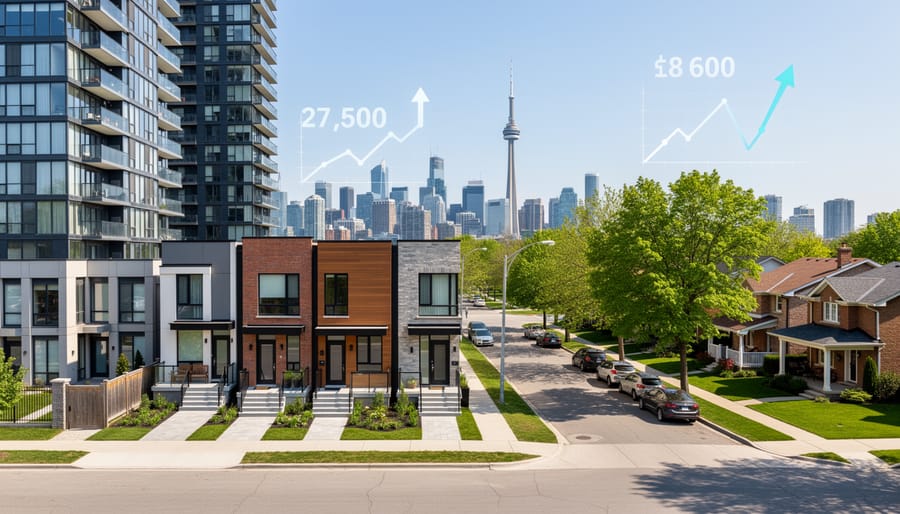
Toronto’s housing market tells different stories depending on which property type you’re considering. Condos, which make up a significant portion of the city’s inventory, have experienced the most modest price movements. The average condo apartment now sits around $720,000, representing a year-over-year change of approximately 3-5% in most neighbourhoods. This relative stability reflects continued strong demand from first-time buyers and investors, balanced against increased supply from recent construction completions.
Detached homes continue to command premium prices, with the average detached property in Toronto hovering near $1.8 million. These properties have seen more volatility, with prices down roughly 8-12% from peak levels reached in early 2022, though recent months show signs of stabilization. Neighbourhoods like Leslieville and High Park remain particularly sought-after, with well-maintained family homes still generating multiple offers.
Semi-detached homes, often viewed as the middle ground for growing families, average around $1.3 million and have experienced similar downward pressure of 6-10% compared to peak pricing. These properties remain attractive to buyers seeking more space than condos offer without the full cost of detached housing.
Townhouses present an interesting dynamic, averaging $950,000 across the city. They’ve proven somewhat resilient, declining only 4-7% from peaks, as they appeal to both first-time buyers stretching their budgets and downsizers seeking low-maintenance alternatives. The performance gap between housing types suggests that affordability concerns are reshaping buyer preferences across Toronto’s diverse real estate landscape.
Neighbourhood Spotlight: Where the Action Is
Toronto’s real estate landscape tells different stories depending on where you look, with distinct neighbourhoods experiencing their own unique market dynamics in 2024.
The Junction Triangle continues its transformation into one of the city’s hottest markets. Once an industrial area, this neighbourhood now attracts young professionals and families drawn to converted lofts and new condo developments. “We’ve seen bidding wars return here while other areas have cooled,” shares Maria Chen, a local realtor who’s worked in the area for eight years. Average prices have climbed 7% year-over-year, outpacing the city average. The appeal extends beyond real estate—new cafes, breweries, and the West Toronto Railpath create a vibrant community atmosphere that residents say feels both urban and accessible.
In contrast, the downtown condo market around King West and the Entertainment District has experienced notable cooling. Inventory has increased significantly as investors list properties amid higher interest rates and downtown office workers maintain hybrid schedules. “We’re seeing more negotiation room than we’ve had in years,” notes longtime resident James Park. Prices in this segment have declined roughly 8-10% from their 2022 peaks, creating opportunities for end-users willing to embrace downtown living.
East York neighbourhoods like Leaside remain remarkably stable, appealing to families seeking established communities with strong schools. Local parent and homeowner Aisha Mohammed explains the draw: “You get that neighbourhood feel without leaving the city. Properties here move quickly, but at more predictable prices.”
Meanwhile, areas along the Eglinton Crosstown LRT corridor are positioned for future growth, with savvy buyers watching closely as the long-awaited transit line approaches completion. These diverse neighbourhood patterns underscore why understanding local dynamics matters as much as citywide trends.
What’s Driving These Market Shifts
Interest Rates and Mortgage Affordability
The Bank of Canada’s interest rate decisions have dramatically reshaped what Toronto homebuyers can afford. After a series of rapid rate hikes that pushed the benchmark rate from 0.25% in early 2022 to 5% by mid-2023, purchasing power has contracted significantly for many residents.
Consider this real-world example: A buyer with a $150,000 down payment looking at a $900,000 home would have faced monthly mortgage payments of approximately $3,200 at the lower 2022 rates. Today, with current rates hovering around 6-7% on a five-year fixed mortgage, those same monthly payments have jumped to roughly $4,800—an increase of $1,600 per month or nearly $20,000 annually.
This shift means that many first-time buyers who qualified for a $900,000 home two years ago can now only afford properties in the $650,000-$700,000 range with the same monthly budget. For Toronto’s housing market, this has particularly impacted condo sales and entry-level detached homes in outer neighbourhoods.
Local mortgage broker Sarah Chen from North York notes that her clients are increasingly exploring alternative financing strategies. “We’re seeing more buyers opting for variable rates, hoping for future decreases, or choosing shorter mortgage terms despite the uncertainty,” she explains.
The silver lining? Higher rates have cooled bidding wars and given buyers more negotiating power. Some Toronto sellers are now offering rate buy-downs or covering closing costs to attract qualified purchasers in this adjusted market.

Supply and Demand Dynamics
Toronto’s real estate market continues to experience tension between supply constraints and persistent demand, creating the complex conditions we see today. The city faces a significant inventory shortage, with housing starts struggling to keep pace with population growth. In 2023, Toronto added approximately 140,000 new residents, yet new construction completions fell short of this demand by considerable margins.
Immigration remains a primary driver of housing pressure. Canada welcomed record numbers of newcomers in recent years, with Toronto receiving the largest share as a top destination for skilled workers and international students. “We’re seeing multiple families competing for single-family homes in established neighbourhoods like North York and Scarborough,” notes Maria Chen, a long-time Leslieville resident and community advocate. “It’s creating challenges for both newcomers trying to find housing and existing residents hoping to upgrade.”
New condo construction, while visible across the skyline, often targets the luxury segment rather than mid-range buyers, leaving a gap in affordable options. Pre-construction projects in areas like the downtown core and along transit corridors show strong absorption rates, yet completion timelines extend 3-4 years out.
The rental market reflects similar pressures, with vacancy rates hovering below two percent. This tight supply pushes more would-be renters toward homeownership, further intensifying competition. Population projections suggest Toronto will add another 700,000 residents by 2030, signaling that supply-demand imbalances may persist without significant policy interventions or accelerated construction activity addressing diverse price points and housing types.

What This Means for Different Types of Market Participants
If You’re Looking to Buy
Toronto’s shifting market dynamics are creating genuine opportunities for prepared buyers. With inventory levels up 40% year-over-year and properties sitting longer on the market, you now have breathing room that didn’t exist during the pandemic frenzy. This translates to fewer bidding wars and more time for thorough inspections and due diligence.
Focus your search on neighbourhoods where new condo completions are exceeding absorption rates. Areas like Liberty Village and the Waterfront have seen price adjustments of 8-12% as developers compete for buyers. If you’re flexible on move-in dates, pre-construction projects are offering incentives like covered closing costs and upgraded finishes.
Don’t rush to lowball in this market. Local realtors report that reasonable offers within 5-7% of asking price are generating productive negotiations, while aggressive lowballs are simply ignored. Sellers have adjusted expectations but still remember recent peak values.
Consider leveraging the current rate environment by exploring assumable mortgages on resale properties where sellers locked in rates below 3%. This strategy is gaining traction in Toronto’s east end neighbourhoods. Get pre-approved before shopping to demonstrate serious intent, as sellers prioritize qualified buyers who can close efficiently in an uncertain market.
If You’re Planning to Sell
If you’re considering selling in Toronto’s current market, setting realistic expectations is essential. While the frenzied bidding wars of recent years have cooled, well-priced homes in desirable neighbourhoods still attract serious buyers. The key is understanding that today’s sellers need a more strategic approach than simply listing and waiting for offers to roll in.
Pricing remains your most critical decision. Overpricing, even slightly, can result in your property sitting on the market while comparable homes sell. Work with an experienced local agent who understands micro-market conditions in your specific neighbourhood, as price points vary significantly across Toronto’s diverse communities. Consider getting a pre-listing home inspection to address potential issues before they become negotiation hurdles.
Presentation matters more than ever when buyers have more time to deliberate. Professional photography, staging, and highlighting recent upgrades can set your property apart. Simple improvements to increase your home’s value, like energy-efficient updates, can appeal to budget-conscious buyers facing higher carrying costs.
Timing also plays a role. Spring typically brings more buyers, but less competition from other sellers in quieter months might work in your favour. Be prepared for reasonable negotiations and remember that a qualified buyer today often represents better value than waiting for uncertain future conditions.
If You’re Already a Homeowner
If you currently own property in Toronto, recent market shifts present both opportunities and considerations worth exploring. With prices stabilizing after years of rapid growth, your home equity remains substantial, though appreciation rates have moderated compared to the pandemic-era surge. This cooling period actually offers advantages for strategic homeowners.
Consider this an opportune moment to reassess your mortgage terms. Many Toronto homeowners who locked in rates during low-interest periods are now facing renewals at higher rates. Speaking with your lender about refinancing options or making accelerated payments while you can helps mitigate future interest costs. Some neighbours in established areas like Leslieville and High Park have successfully leveraged their equity for renovations that boost long-term value.
Property improvements remain a smart investment during market corrections. Energy efficiency improvements, basement finishing, or kitchen updates not only enhance your quality of life but position your home competitively when market conditions shift again.
Take the long view. Toronto’s fundamentals—limited land supply, strong immigration, and robust employment—continue supporting property values over extended timelines. While short-term fluctuations happen, homeownership here historically proves resilient. Focus on maintaining your property and building equity rather than timing market peaks.
Expert Predictions: Where the Market Is Headed
Looking ahead to the remainder of 2024 and into 2025, industry experts paint a cautiously optimistic picture for Toronto’s real estate market, though they emphasize that uncertainty remains a key factor.
The Bank of Canada’s monetary policy will likely be the primary driver of market activity. Most economists surveyed by major financial institutions predict further interest rate cuts throughout 2024, with some forecasting rates dropping to 3.5% by mid-2025. This gradual easing could rejuvenate buyer confidence and increase purchasing power, particularly for first-time buyers who have been sidelined by high borrowing costs.
The Toronto Regional Real Estate Board expects moderate price growth of 3-5% annually over the next two years, a stark contrast to the Toronto housing trends seen during the pandemic boom. This measured appreciation reflects a more balanced market where neither buyers nor sellers hold overwhelming leverage.
However, experts caution against treating these predictions as certainties. Dr. Sarah Chen, housing economist at a major Canadian bank, notes that “global economic conditions, immigration policy changes, and unexpected shifts in employment could all alter our current trajectory.” Recent federal government discussions about adjusting immigration targets could significantly impact rental demand and investor activity.
The condo market specifically faces unique pressures, with a record number of new units scheduled for completion through 2026. This increased supply may moderate condo price growth even as detached homes appreciate more rapidly.
Local real estate professionals emphasize that neighbourhood-level variations will persist, making blanket predictions less useful than understanding specific community dynamics. Smart buyers and sellers will need to stay informed and remain flexible as market conditions evolve.
Toronto’s real estate market continues to evolve through shifting economic conditions, policy changes, and demographic trends. While headlines often swing between extremes, the reality is more nuanced. The market isn’t crashing, nor is it returning to the frenzied bidding wars of recent years. Instead, we’re seeing a recalibration that presents different opportunities depending on your circumstances and neighbourhood.
Whether you’re a first-time buyer watching for affordability improvements, a current homeowner considering your next move, or simply someone invested in understanding local economic conditions, staying informed helps you make confident decisions. Market conditions vary significantly across Toronto’s diverse neighbourhoods, making local insights essential.
The key is approaching this market with realistic expectations, thorough research, and professional guidance tailored to your specific situation. My Town Crier remains committed to bringing you regular updates on Toronto’s real estate landscape, combining data-driven analysis with community perspectives that matter to residents.
Knowledge empowers better decisions. Stay connected with your local market, engage with your community, and remember that real estate decisions should align with your personal goals and financial readiness, not market timing alone.