
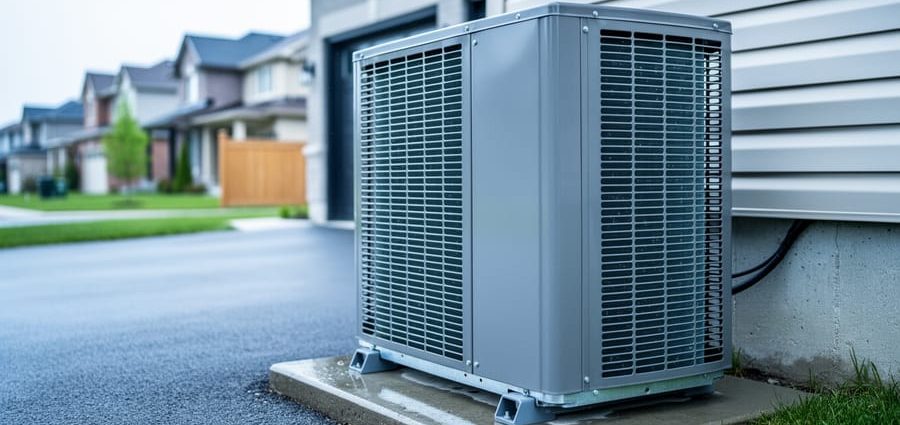
A 3-ton heat pump package unit installed in a Canadian home typically costs between $7,399 and $17,899, with most homeowners in the Toronto area paying $7,500 to $10,000 when existing ductwork is in place. This price range puts you in the sweet spot for a system that will heat and cool a 1,500 to 1,800 square foot home efficiently, but the final number on your invoice depends on several critical factors.
The gap between a $7,500 installation and an $18,000 one comes down to equipment efficiency ratings, whether you need new ductwork, installation complexity, and the brand you choose. Equipment alone ranges from $4,199 to $13,499 before installation costs enter the picture. A builder-grade 14 SEER unit costs thousands less than a high-efficiency 20 SEER model with advanced inverter technology, but that premium equipment can cut your monthly utility bills significantly in Toronto’s cold winters.
Right now, Canadian homeowners have access to substantial rebates that can reshape your budget. The Canada Greener Homes Initiative provides grants up to $5,600, while B.C. residents can claim up to $19,000 in combined incentives. These programs make 2026 an opportune time to upgrade, particularly if you’re replacing an aging furnace or air conditioner. Understanding what drives these costs up or down, when professional installation justifies the expense, and how to navigate available rebates will help you make a confident decision for your home.
What You’ll Pay for a 3 Ton Heat Pump in Toronto
Equipment Costs vs. Installed Costs
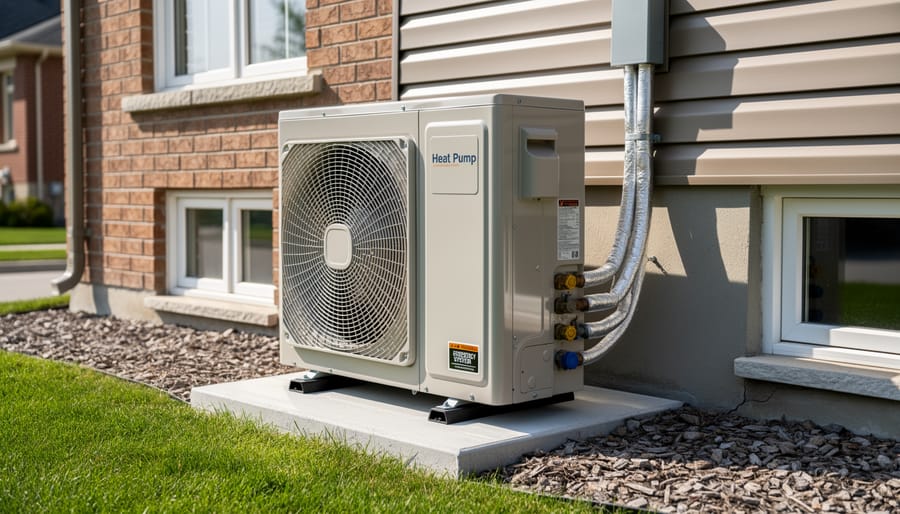
When shopping for a 3-ton heat pump package unit, you’ll encounter two distinct price points: equipment-only and installed cost. Equipment alone runs $4,199 to $13,499, depending on brand, efficiency rating, and cold-climate features. That’s what you’d pay if you could simply order the unit and walk out the door.
Complete installed systems cost $7,399 to $17,899 for the same equipment. The difference, typically $3,000 to $5,000, covers professional labor, electrical work, refrigerant line connections, and startup testing. You’re also paying for proper sizing calculations, permit applications, code compliance, and warranty activation that only licensed contractors can provide.
Most Toronto homeowners replacing an existing system with a 3-ton air-source heat pump and functional ductwork spend $7,500 to $10,000 total. That’s the installed figure, not just the equipment. If you’re seeing quotes closer to $17,000, the job likely involves ductwork modifications, electrical panel upgrades, or a premium high-efficiency model designed for extreme cold. The equipment price tells you what the machine costs; the installed price tells you what it actually takes to make it work in your home.
Typical Toronto Installation Range
For most Toronto homeowners with existing ductwork, a straightforward 3-ton air-source heat pump replacement lands in the $7,500 to $10,000 range. This represents the typical scenario where your home already has functional ductwork in good condition and the installation is relatively uncomplicated.
| Cost Component | Price Range | Typical Toronto Install |
|---|---|---|
| Equipment Only (3 Ton) | $4,199, $13,499 | $5,500, $8,000 |
| Complete Installed System | $7,399, $17,899 | $7,500, $10,000 |
| National Average (2.5-3 Ton) | $9,400, $16,750 |
The narrower Toronto range reflects mid-tier equipment and standard installation complexity. You’ll hit the lower end with a basic efficiency model and minimal electrical upgrades, while cold-climate models with higher SEER ratings push toward $10,000. The broader national average of $9,400 to $16,750 accounts for varying regional labor costs, installation challenges, and equipment choices across different climates. Smaller systems like the 2 ton heat pump cost generally run $1,000 to $2,000 less, though the price difference narrows when installation complexity increases.
Breaking Down Where Your Money Goes
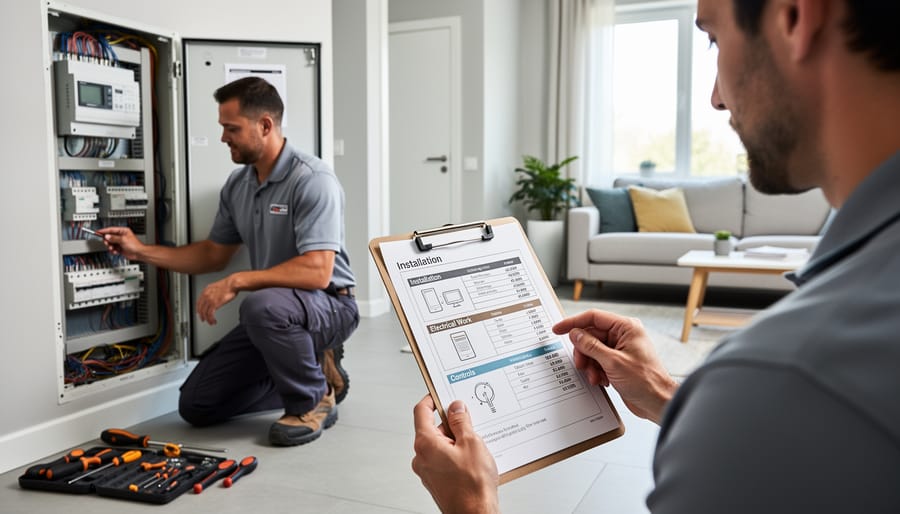
When you see an installed price of $7,500 to $10,000 for a typical 3-ton heat pump in Toronto, that figure represents several distinct components working together to deliver a complete, code-compliant system. Understanding where your money goes helps you evaluate quotes and spot potential gaps in contractor estimates.
The largest share goes toward the heat pump equipment itself, the outdoor condenser unit, indoor air handler, refrigerant lines, and accessories typically account for 40-60% of the total project cost. For a mid-range 3-ton system, expect the equipment package to run $4,200 to $8,500, with higher-efficiency cold-climate models pushing toward the upper end. Installation labor represents the next significant portion, covering the actual physical work of mounting equipment, running lines, connecting electrical, pressure-testing the refrigerant circuit, and commissioning the system. Professional installation typically adds $2,000 to $4,000 to the equipment cost, with complexity and crew size affecting the final number.
Beyond the core equipment and labor, several essential components round out the installed price:
- Electrical upgrades including dedicated circuits, disconnects, and panel modifications if your home’s electrical capacity falls short
- Ductwork assessment and modifications to seal leaks, improve airflow, or add dampers for balanced heating and cooling
- Permits and inspections required by Toronto building codes, typically $200 to $500 depending on scope
- Thermostat and controls, especially smart thermostats optimized for heat pump staging and defrost cycles
- Disposal and haul-away of your old furnace or air conditioner, often included but sometimes billed separately
Homes with older electrical panels frequently need a service upgrade to handle the heat pump’s power draw, adding $1,500 to $3,000 in cases where amperage capacity is insufficient. Similarly, homes with poorly-designed or aging ductwork may require zone dampers or duct sealing to achieve proper airflow, particularly if the existing system was sized for a furnace rather than a heat pump’s different air delivery characteristics. These additional costs explain why two identical heat pump models can yield vastly different total installed prices across different Toronto properties.
What Drives the Price Up or Down
System Type and Efficiency Rating
A basic 15-SEER heat pump package unit sits at the lower end of the price spectrum, while high-efficiency models rated 18-SEER or higher can push equipment costs up by $2,000 to $4,000. Cold-climate heat pumps with variable-speed compressors and enhanced defrost cycles, essential for Toronto’s winter temperatures, typically add another $1,500 to $3,000 compared to standard models. You’ll also pay a premium for inverter-driven systems that maintain heating capacity down to -25°C, but they deliver the year-round performance Toronto homeowners actually need. Dual-fuel configurations that pair a heat pump with a backup furnace cost more upfront yet provide insurance against the coldest stretches.
Your Home’s Existing Setup
Your home’s current condition plays a major role in what you’ll ultimately pay. Existing ductwork in good shape can save you thousands, installing a 3-ton unit into a well-maintained system keeps you in that $7,500 to $10,000 sweet spot. But if your ducts are undersized, leaking, or poorly insulated, expect to add $2,000 to $5,000 for repairs or replacement before the heat pump even goes in.
Older Toronto homes often need electrical upgrades too. Many lack the 200-amp service modern heat pumps require, and a panel upgrade runs $1,500 to $3,000. Poor insulation makes the system work harder, which can push contractors to recommend a larger, pricier unit or insulation improvements first. Homes with basements, multiple floors, or tricky layouts also drive up labor costs, more zones mean more work, and older radiator-heated houses without any ductwork face the highest bills, sometimes pushing past $20,000 for a complete conversion.
Contractor and Location Variables
Toronto’s HVAC market shows notable price variation among contractors, shaped by their overhead, experience level, and service approach. Established companies with multiple crews and extensive warranties typically quote 15-25% higher than smaller operators, though the premium often includes faster scheduling, comprehensive permits, and dedicated service teams. During peak replacement seasons, late spring and early fall, quotes can climb as demand outpaces installer availability, while booking installations in January through March sometimes yields 10-15% lower pricing when crews have lighter schedules.
Neighborhood accessibility also influences costs. Homes in older Toronto areas with narrow lot access, limited street parking, or heritage building restrictions may add $300, $800 to the installation quote for equipment staging, crane rentals, or extended labor hours. Conversely, newer subdivisions with straightforward access and standardized layouts often receive lower quotes. Getting three written estimates from licensed contractors helps identify the realistic range for your specific property while revealing what each company includes in their pricing structure.
DIY vs. Professional Installation: What Toronto Homeowners Should Know
Installing a 3-ton heat pump package unit yourself might seem like a way to save thousands, but the reality is more complicated. Heat pump installation requires specialized electrical work, refrigerant handling, and precise calculations that go beyond typical DIY home improvement projects. In Ontario, any work involving refrigerant requires a valid G2 or G3 Gas Technician license, and electrical connections to your panel must meet Ontario Electrical Safety Code standards. Most manufacturers also void equipment warranties if installation isn’t performed by a licensed HVAC contractor, which means a mistake could cost you the entire $4,199, $13,499 equipment investment.
The technical challenges alone make professional installation the smarter choice for most Toronto homeowners. Proper sizing calculations account for your home’s heat loss, insulation levels, and Toronto’s winter temperatures. Wrong refrigerant charge levels reduce efficiency by 20% or more, and improper ductwork connections create air leaks that waste energy. Many contractors report fixing botched DIY installations that cost homeowners more in the long run than hiring a professional from the start.
Pros
- DIY installation can save $3,000, $5,000 in labor costs if you’re qualified.
- You control the timeline and avoid scheduling delays with contractors.
- Hands-on experience teaches you system operation and basic troubleshooting.
Cons
- Most manufacturers void warranties entirely without licensed professional installation.
- Ontario licensing laws prohibit unlicensed refrigerant work and electrical connections.
- Improper installation creates safety hazards including refrigerant leaks and electrical fires.
- Incorrect sizing or refrigerant charge reduces efficiency and shortens equipment lifespan.
- Permit applications and inspections require contractor credentials in most Toronto jurisdictions.
Professional installation also protects your investment when you sell. Toronto homebuyers increasingly ask for proof of proper HVAC installation, and permitted work with inspection records adds credibility. Given that professional installation of a 3-ton system typically runs $7,500 to $10,000 complete, and federal grants can offset $125 to $5,000 of that cost, the price gap between DIY and professional narrows considerably once you factor in permits, tools, and peace of mind.
Available Rebates and Incentives for Toronto Homeowners
Toronto homeowners installing a 3-ton heat pump can significantly reduce their upfront costs through federal and provincial programs. The Canada Greener Homes Initiative provides grants ranging from $125 to $5,000 specifically for heat pump systems, plus up to $600 toward required pre- and post-retrofit EnerGuide evaluations. Combined, the maximum grant a household can receive totals $5,600.
Beyond grants, the program offers interest-free loans up to $40,000 with a 10-year repayment term, which covers installation costs not offset by rebates. These heat pump incentives can turn a $9,000 installation into a more manageable net cost once funding arrives.
To claim these Toronto energy rebates homeowners follow a specific process:
- Book a pre-retrofit EnerGuide evaluation with a certified energy advisor to establish your home’s baseline efficiency
- Register with the Canada Greener Homes Initiative online portal using your evaluation report
- Obtain quotes from certified HVAC contractors who meet program requirements
- Complete the heat pump installation with your chosen contractor, ensuring all work meets code
- Arrange a post-retrofit evaluation to document the energy efficiency improvements
- Submit all documentation, including invoices and evaluation reports, through the portal to receive grant payment
The entire process typically takes three to six months from initial evaluation to grant payment. While the upfront evaluation costs around $300 to $500, remember that the program reimburses up to $600 of these assessment fees, making the rebate process essentially cost-neutral for most homeowners.
How Heat Pumps Impact Toronto Home Values
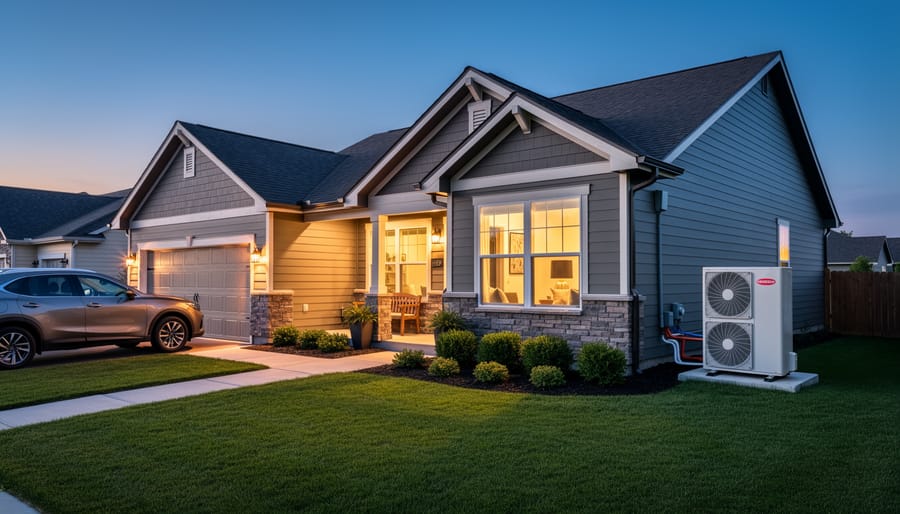
A heat pump installation typically delivers a solid return when it’s time to sell. Toronto buyers increasingly prioritize energy efficiency, and a modern heat pump checks that box while signalling lower monthly costs ahead. In a competitive market, that edge matters, homes with documented energy savings stand out in Toronto home listings and often command higher offers from buyers focused on long-term value.
The financial appeal is straightforward: a heat pump can help homeowners save on energy bills sometimes by hundreds of dollars annually compared to older furnace and air conditioner setups. Prospective buyers understand that reduced utility costs translate to more disposable income each month, making your property more attractive than comparable homes relying on conventional HVAC systems. Real estate agents routinely highlight heat pumps during showings, particularly when targeting environmentally conscious buyers or first-time purchasers sensitive to operating expenses.
Environmental considerations weigh heavily in Toronto’s real estate market. The city’s push toward greener housing aligns with provincial climate goals, and a heat pump demonstrates that your home meets evolving sustainability standards. This matters more than many sellers realize, younger buyers especially view energy-efficient upgrades as essential rather than optional, and they’re willing to pay a premium for properties that reduce carbon footprints without sacrificing comfort.
ROI varies by neighborhood and install quality, but most homeowners recoup a meaningful portion of their investment at resale. The typical $7,500 to $10,000 installation cost becomes less daunting when you factor in years of lower energy bills plus the boost to your asking price. Combined with available federal grants that reduce upfront costs, a heat pump upgrade strengthens your position in Toronto’s market while delivering tangible financial benefits today.
Common Questions About 3 Ton Heat Pump Costs in Toronto
Is a 3 ton heat pump the right size for my Toronto home?
A 3 ton unit typically serves homes between 1,500 and 2,100 square feet with standard insulation and ceiling heights. Your contractor should perform a Manual J load calculation accounting for your home’s insulation, windows, ceiling height, and Toronto’s climate before recommending a size, because an oversized or undersized unit will run inefficiently and cost more to operate.
How long does a complete heat pump installation take in Toronto?
Most residential installations finish in one to two days, assuming your ductwork is in good condition and your electrical panel can handle the load. More complex jobs requiring duct modifications, electrical upgrades, or challenging outdoor unit placement can stretch to three days.
Will a heat pump actually work during Toronto’s coldest weeks?
Modern cold-climate heat pumps continue heating effectively down to -25°C or lower, though efficiency drops as temperatures fall. Many Toronto homeowners keep a backup heating source for the rare extreme-cold days, but the heat pump handles the vast majority of the heating season on its own.
How long should I expect a 3 ton heat pump to last?
With regular maintenance, a quality heat pump typically runs 15 to 20 years in Toronto’s climate. Annual professional servicing, filter changes, and keeping the outdoor unit clear of debris and snow will push your system toward the upper end of that range.
Can I replace just the outdoor condenser unit to save money?
Replacing only the outdoor unit rarely works well because modern condensers are engineered to match specific indoor air handlers, and mismatched components void warranties while reducing efficiency. You’ll get better performance and reliability by replacing both components as a matched system, which is what the pricing ranges throughout this guide reflect.
Understanding these common concerns helps Toronto homeowners set realistic expectations before meeting with contractors. The most important takeaway: invest time in finding a qualified installer who’ll size your system correctly and explain how it’ll perform through every season in your specific home, rather than chasing the lowest upfront quote and regretting the choice later.
For most Toronto homeowners, installing a 3 ton heat pump package unit will land in the $7,500 to $10,000 range when you have existing ductwork in good condition. That’s a realistic budget for a quality system professionally installed with all permits and code compliance handled properly. While equipment-only prices start around $4,199, the complete installed cost reflects crucial work like electrical upgrades, proper refrigerant charging, and warranty protection that you can’t replicate with DIY approaches.
The investment makes more sense when you factor in available incentives. Federal programs offered grants up to $5,000 toward heat pump installations, plus evaluation credits up to $600 and interest-free loans reaching $40,000 with ten-year repayment terms. These programs substantially reduce your net cost while ensuring the system meets efficiency standards.
Beyond the upfront expense, you’re gaining two concrete benefits: lower monthly energy costs compared to traditional furnaces, and increased home value in Toronto’s efficiency-conscious real estate market. Buyers increasingly prioritize modern heating systems with reduced operating costs. Professional installation protects that value through proper sizing, warranty coverage, and documented compliance with local codes.